
FREE WORLDWIDE DELIVERY
Christmas Sweets 2026
Little Milanese,
little claws,
little rascals,
cinnamon stars,
a man made of dough…
Made to keep.
Open the cookbook ↓
This Christmas, everything we make comes from one world: the sweets of Christmases. Spices that crossed oceans, biscuits baked in November and hidden until December, sweets given in boxes and jars that people kept. We spent the autumn in old cookery books, and these are the stories we found.
Why Christmas smells like Christmas
Spices were expensive in medieval Europe because they came from far-away tropical areas. Cinnamon comes from India, for example; cloves and nutmeg from Indonesia; ginger from Oceanic Southeast Asia. They had to be imported into Europe via the spice route, making them a special treat used for festivities including Christmas.
This was also true of certain fruits. Citrus was grown in southern climates and was in season in winter, and currants were grown in Greece. Both had to be imported at great expense, making them a luxury. Fruits like these were baked into Christmas cakes and treats, often with honey, as a way of preserving them.
There is no deep symbolism in cinnamon and December. People simply chose to use it then, and we have been seeking out that smell ever since.
With food historian Dr Eleanor Barnett
-
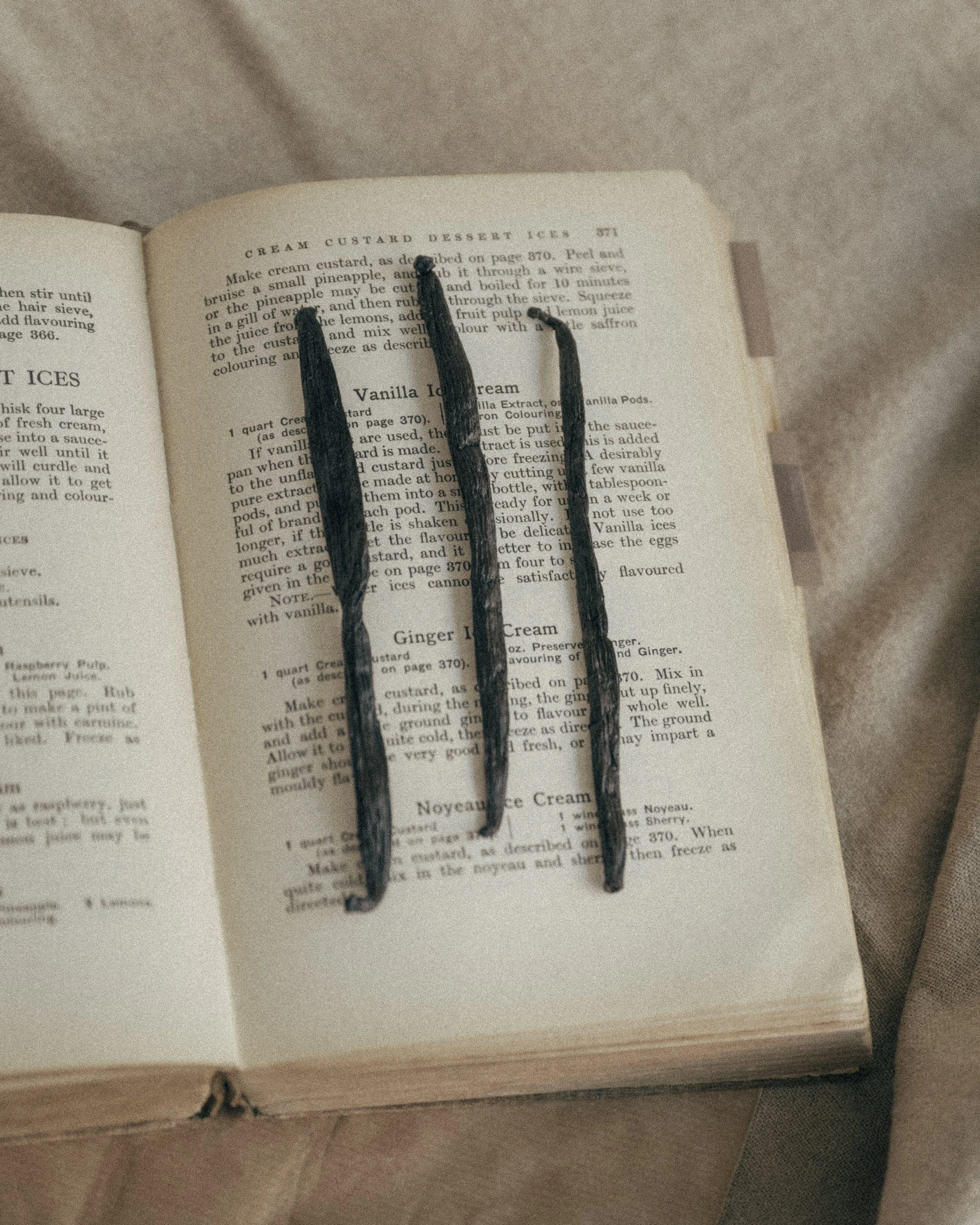
![Three dark vanilla pods lying on an open vintage cookery book, on a page of old recipes for vanilla and ginger ice cream.]()
VANILLA
Mexico
The pod of a climbing orchid. Sweet and warm, it softens every other spice in the tin. -
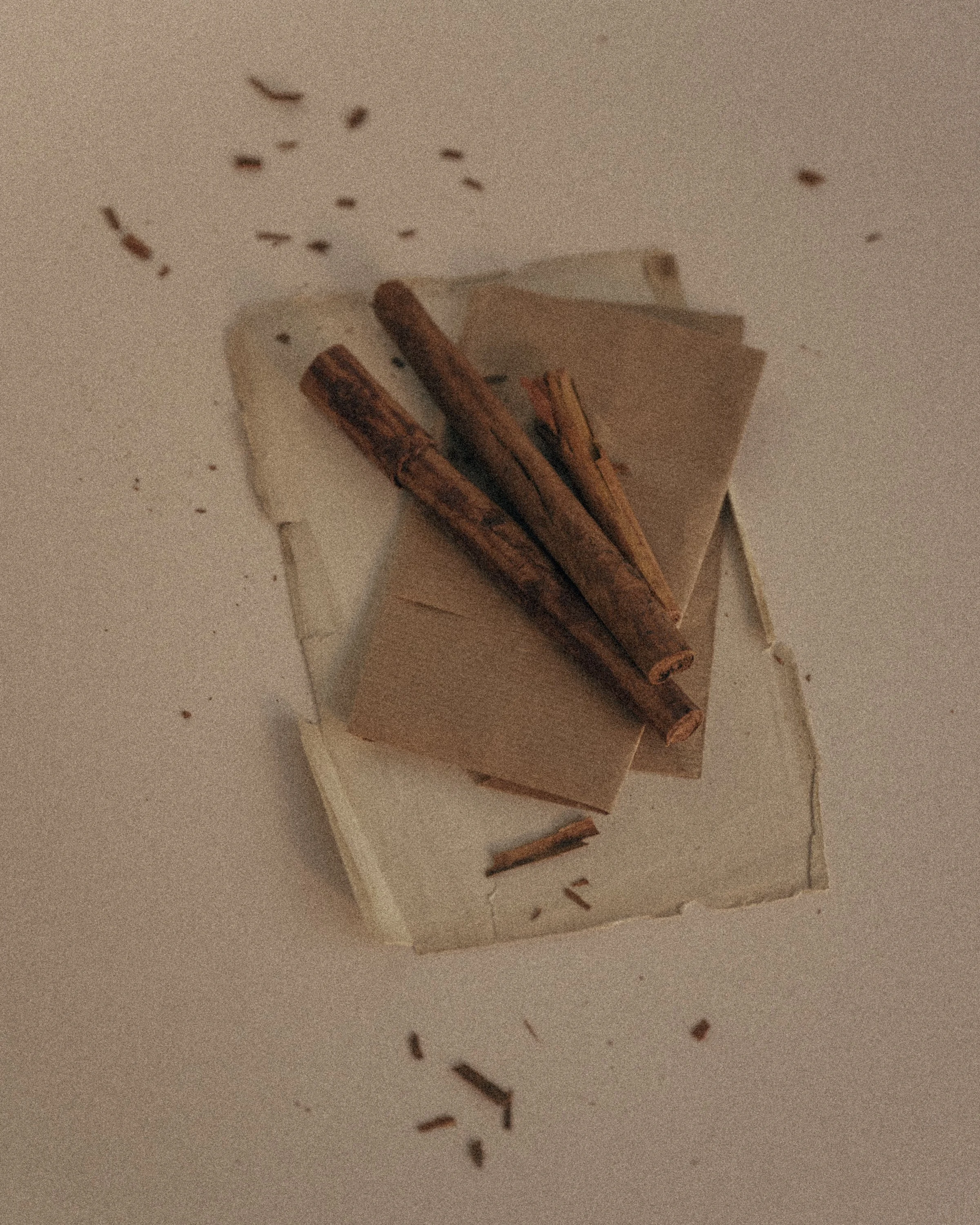
![Cinnamon sticks on a small stack of old, torn papers, with fine flakes of bark scattered around them.]()
CINNAMON
Sri Lanka and India
The inner bark of a tree, curling into quills as it dries. Warm, sweet and woody: the smell of Zimtsterne. -
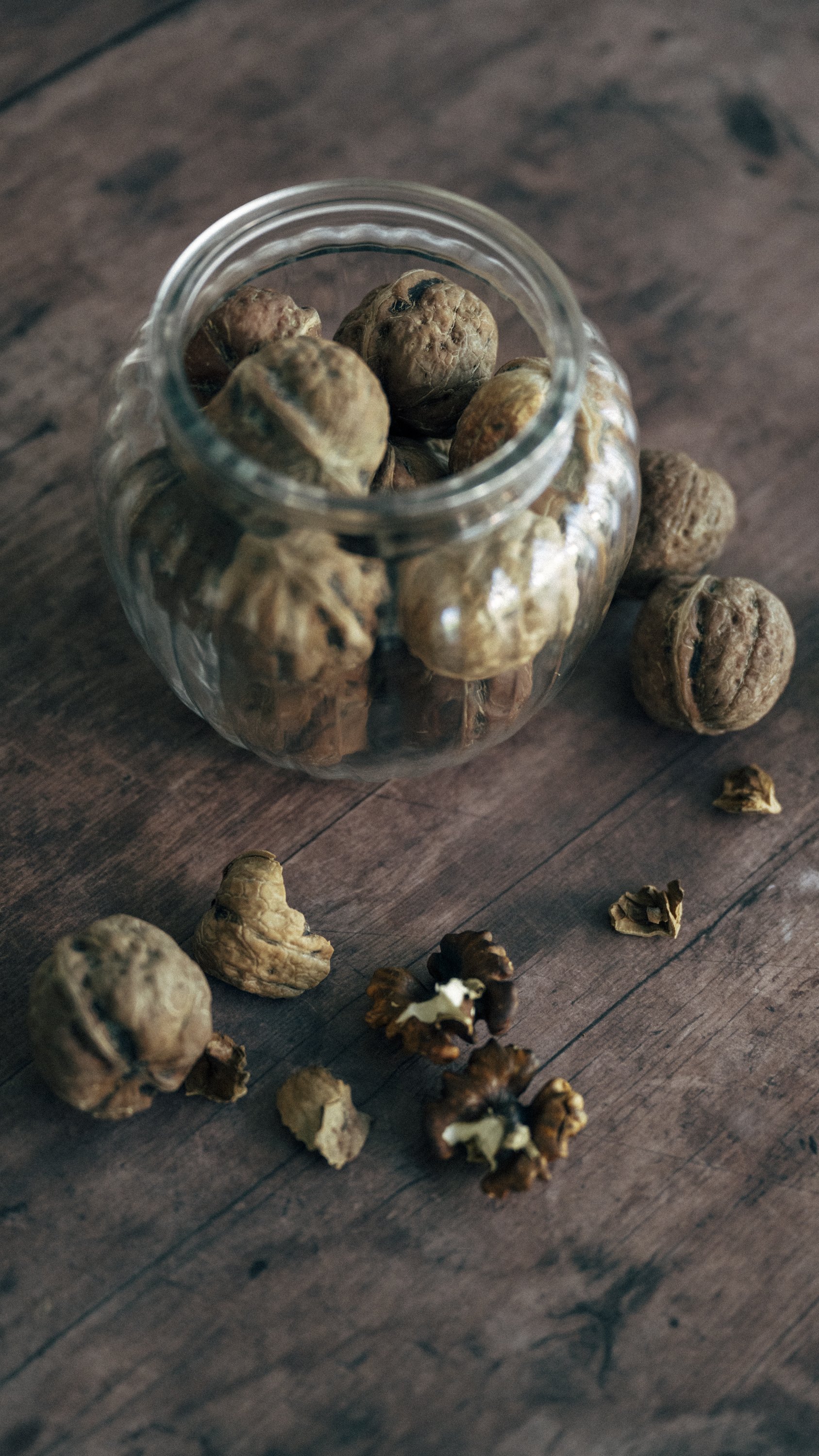
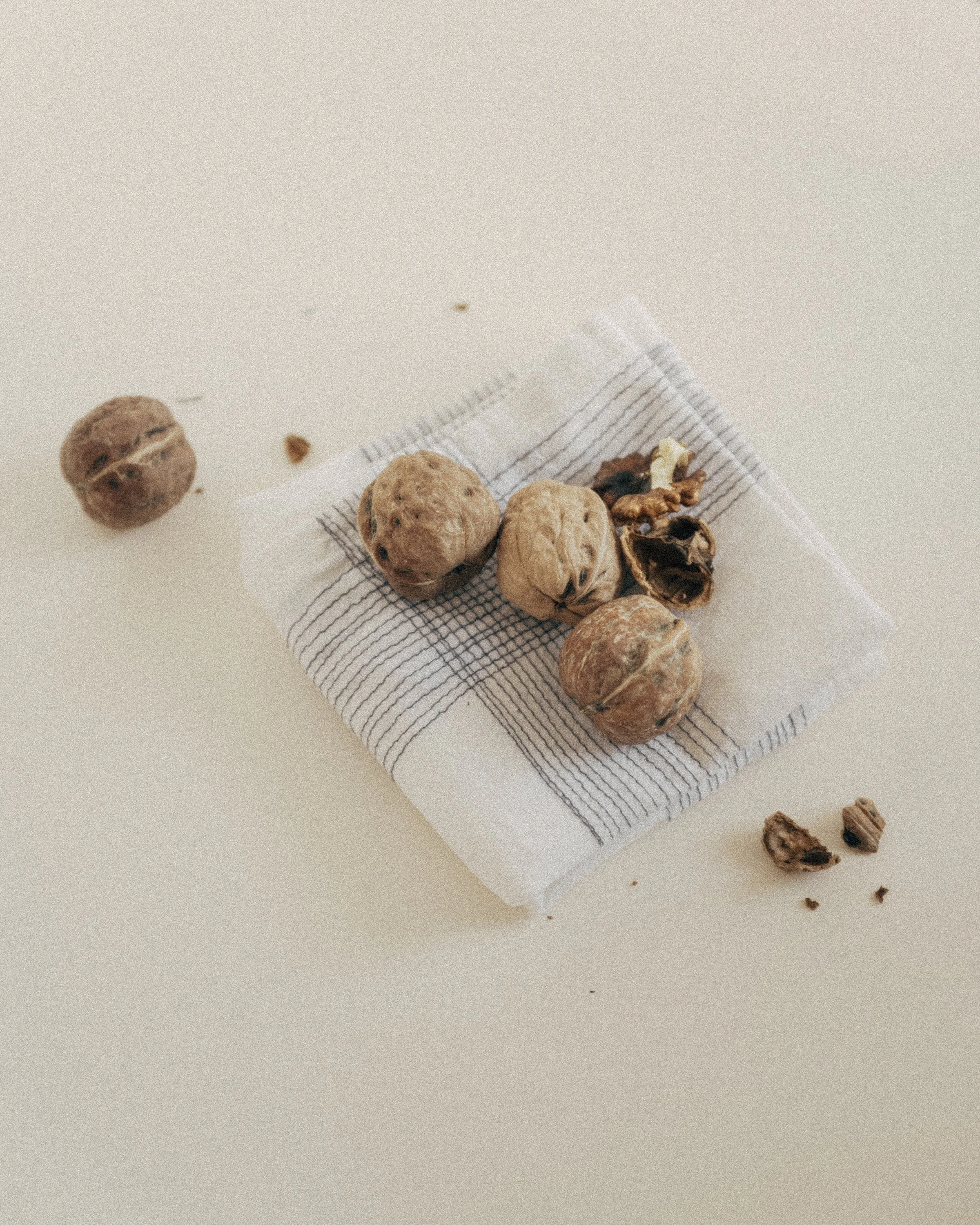
![Whole walnuts and cracked shells on a folded linen cloth with thin grey stripes.]()
WALNUTS
Persia
Brought to Europe long ago and kept in their shells all winter, walnuts went into the shoe on St Nicholas’ night, as a little treasure of their own. -
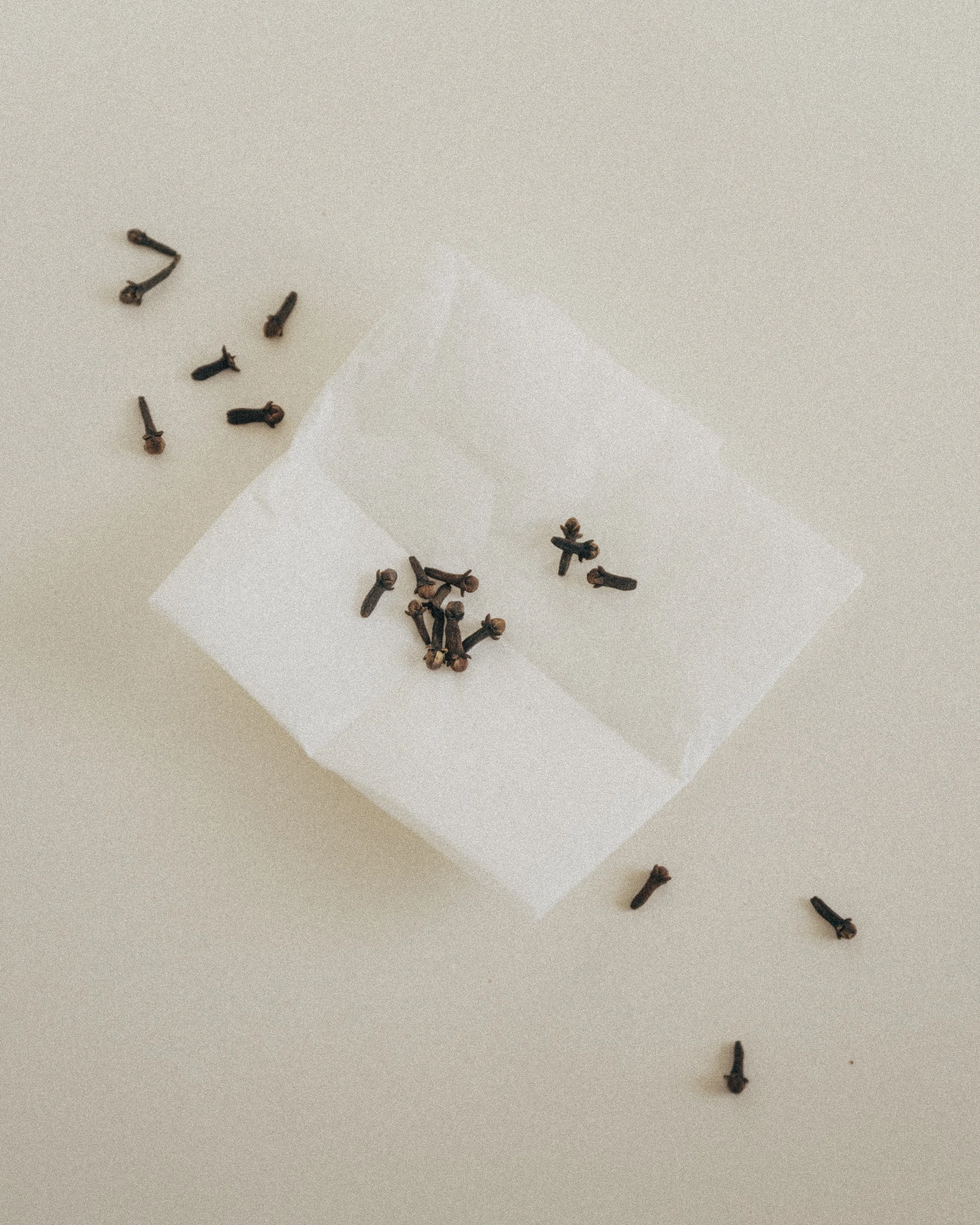
![Whole cloves scattered on and around a folded sheet of white paper, seen from above.]()
CLOVES
Indonesia
In a 14th century gingerbread recipe, whole cloves were pressed into the edges like tiny nails. -
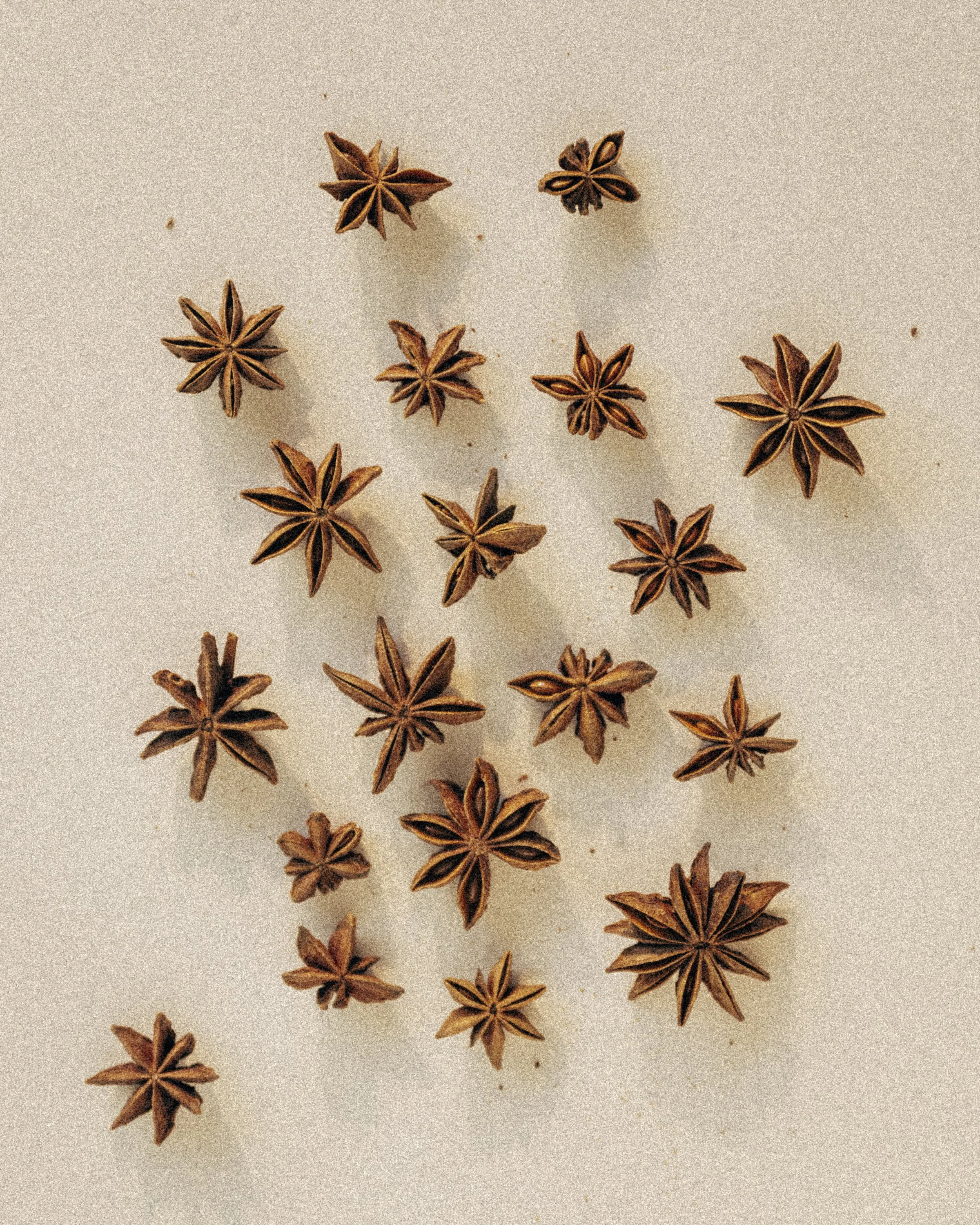
![Star anise pods scattered across cream coloured paper, seen from above.]()
STAR ANISE
Southern China and Vietnam
Shaped like a star and smelling of liquorice, it found its way into mulled wine and onto the Christmas table.
Every biscuit begins with a name
In Switzerland, almost every Christmas biscuit ends in li. It is the small, fond ending Swiss German gives to things it loves, and so the Christmas tin is full of little ones: Mailänderli, Chräbeli, Brunsli, Anisbrötli. Even the word for biscuit, Guetzli, most likely comes from guet, good. A little good thing.
The names are older than most recipes, and they tell you how each biscuit was seen by the people who first baked it. Some are named for a shape, some for a colour, some for a place, and some for a mood.
Zimtsterne · cinnamon stars
Named for their spice and their shape, and nothing else. No flour, no butter, just almonds, sugar, egg white and cinnamon.
Mailänderli · little Milanese
A butter biscuit with lemon, named after Milan. Why Milan, nobody quite knows. The name has kept its city and lost its story.
Chräbeli · little claws
Anise biscuits cut and bent into curved shapes. They are left to dry overnight before baking, so that each one rises on a little foot.
Brunsli · little brown ones
From Basel. Chocolate, almond and cinnamon, and named simply for their colour.
Spitzbuben · little rascals
Two biscuits with jam in between, and a face cut into the top one. Nobody remembers who the rascals were.
Of all the names in the tin, the plainest one belongs to the oldest kind of biscuit: one made to keep. Zimtsterne have no flour and no butter, so they stay good for weeks in a closed tin. Noémie bakes them every December at Sternen Walchwil, and she has shared her recipe with us.
Bake them yourself ↓
A recipe from Sternen Walchwil
Zimtsterne
Cinnamon stars, by Noémie
For the dough
500 g white almonds, ground
350 g sugar
20 g cinnamon
1 pinch of salt
100 g egg white
For the glaze
200 g icing sugar
50 g egg white
Method
- Mix everything and knead into a dough by hand or with a stand mixer.
- Let it chill in the fridge for 1 hour.
- Roll out the dough to finger thickness.
- For the glaze, mix the icing sugar and egg white and beat lightly until slightly thickened.
- Spread the glaze over the dough and freeze for 30 minutes, or chill for up to 1 hour until the glaze has firmed up.
- Cut out stars and place them on baking paper.
- Bake at 150 °C for 5 minutes.
- Let them dry and cool, then store in an airtight container.
Something to wrap them in
PAY WITH TWINT
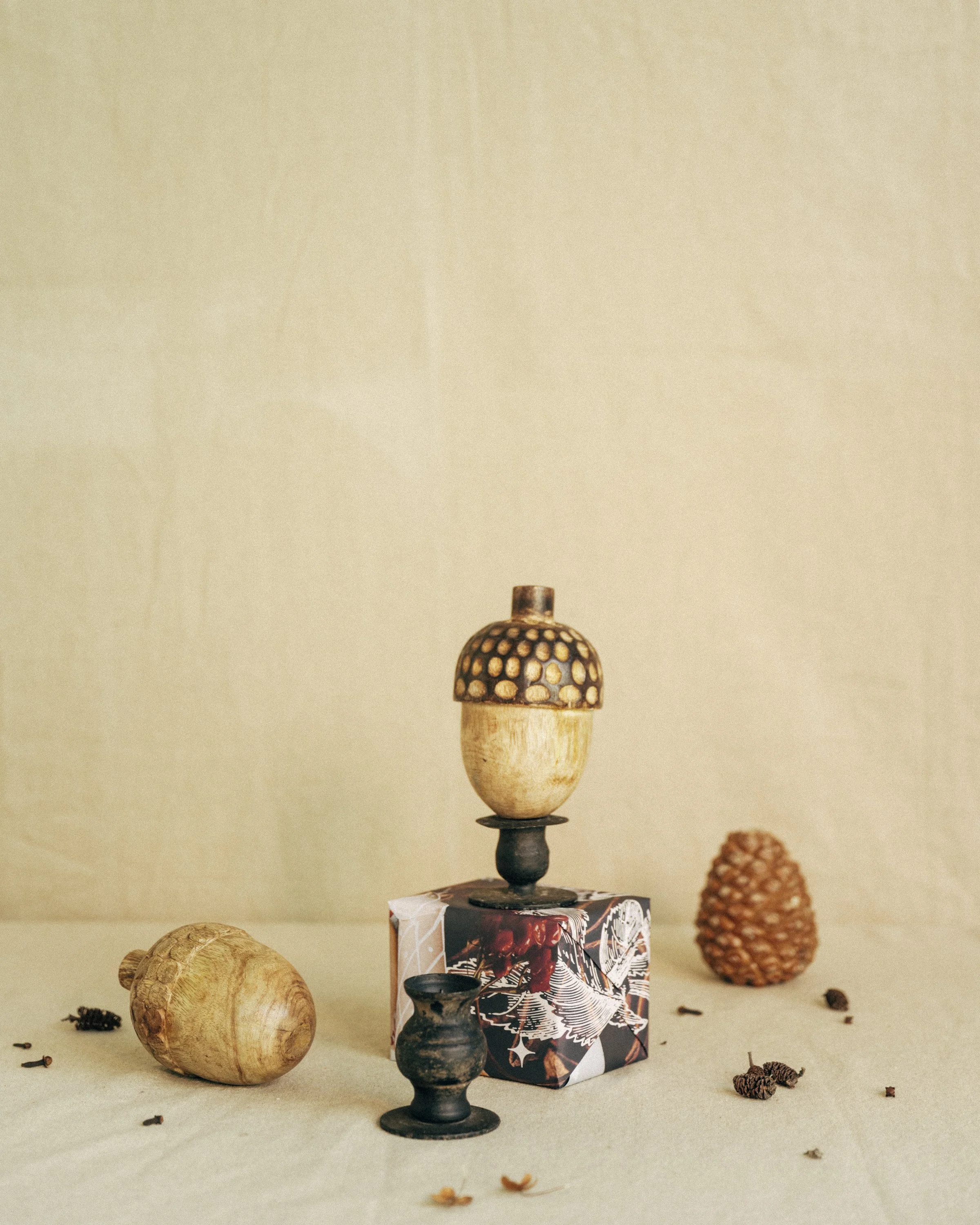
It has begun to snow again, softly, the small flakes settling on a shoulder without wetting it. The stalls have lit their lamps against the four o'clock dark. Somewhere behind us a new pot of mulled wine is going on, red and clove-dark, and the lane smells of orange peel, cinnamon and Zimtsterne.
It is into this scene that we invite you to step with our Christmas Market paper.
Our journey begins with the fruit of the season: the orange. Raw, the peel is oily and sharp, releasing a fine spray when pressed. Dried slowly above a stove, the flesh turns amber and translucent, thin enough that the lamp behind it shows straight through the segments. That is why they are hung in windows. The fruit stops being a thing you eat and becomes a thing you look through.
The next stall keeps its spices all in one basket: cinnamon, star anise, cardamom. The cinnamon we drew as the quill, rolled tight, because that shape remembers the tree, the bark cut from young shoots and left to curl as it dries. Beside it the star anise, split open, still holding its seed and the cardamom pods, pale and papery, still rattling.
Everyone's favourite stall stands at the turn of the lane, past the knitted hats and the ice rink. It sells only Zimtsterne, from a recipe handed down four generations and never written out. The daughter learned it at her grandmother's elbow, by hand and by weight, and she will not say what is in it. The stars come out warm, the icing set in a soft white cap that stops short of the points, so the dark spiced edge shows underneath. No two are quite the same. Some lean, some have a short arm. There are hazelnut ones and almond ones, and a third with orange zest grated into the dough.
Christmas Market is made for the gift you hand over in a warm room. Hold it, and you can almost feel the cold coming off your coat, and catch, just faintly, the scent of orange and a new batch of Zimtsterne on the air.
PAY WITH TWINT
Come out early, before the light does much. Snow changes what a garden sounds like. Footsteps go dull, the birds thin to a robin somewhere in the hedge, and a branch cracks as it lets go of its load. Everything else has stopped. Underfoot the path is set hard, ice white in the wheel ruts where the air was trapped, giving with a sound like thin glass.
The borders were left standing on purpose, and the frost has found every one of them. Seedheads on the phlomis, whorled up their stems like small clenched fists, each one furred white. Miscanthus arching over the path, holding its shape all winter, gone the colour of straw. Echinacea keeping its cones above the snow, brown and bristling, the last petals faded through to grey. Box clipped into globes, packed hard enough that the snow sits on top and does not sink in. Low in the bed the hellebore has come up, nodding, cream and green, the only thing here in flower.
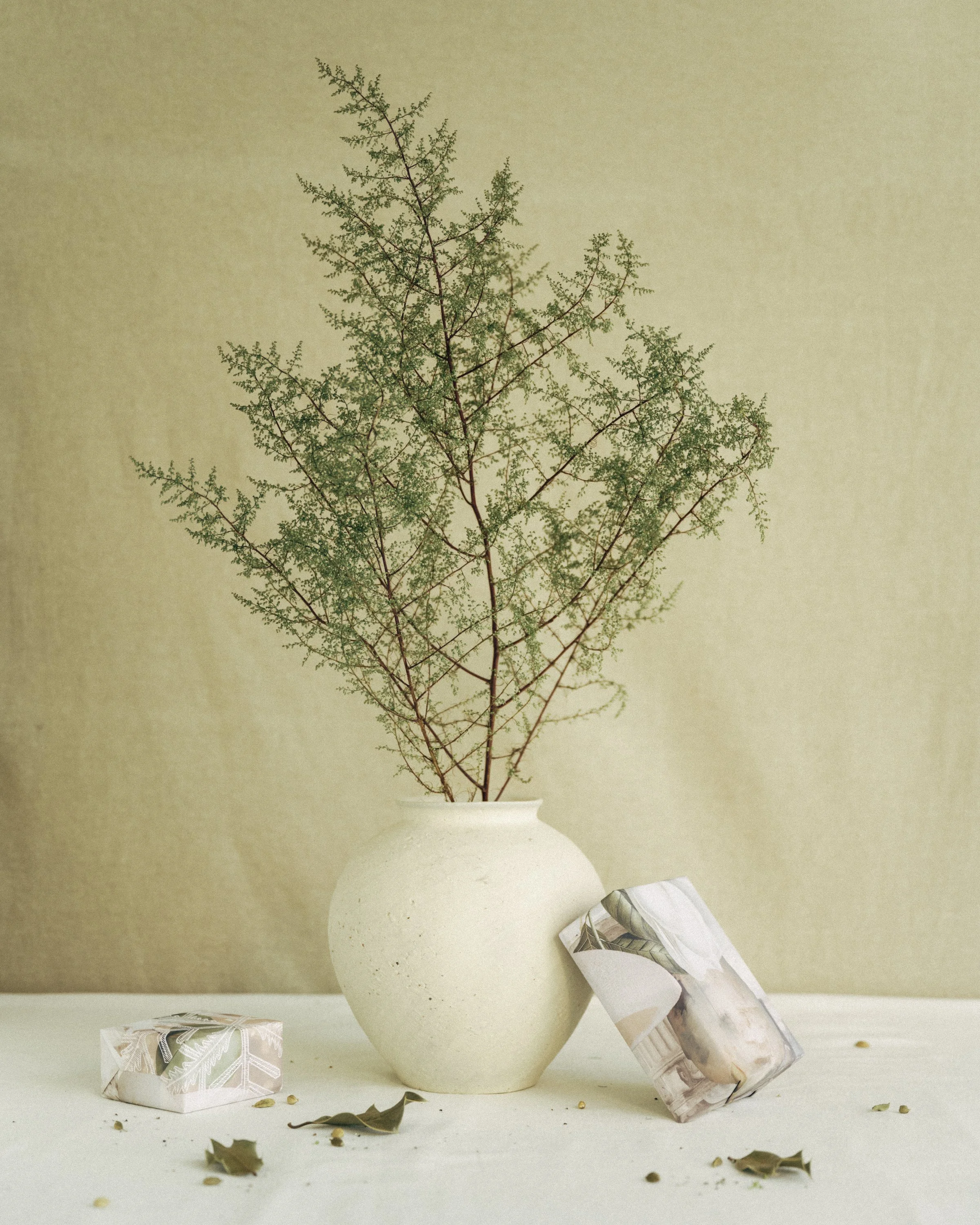
At the turn of the path stands the eucalyptus, leaves round as coins and silvered along the edge. We take a short branch. Press one between finger and thumb and the oil comes up sharp and camphorous, the only strong scent in the whole garden.
Beyond it the apple tree, and in its crown the mistletoe, growing in a ball, leaves in pairs like small green paddles, forking and forking again on stems that never turn woody. Its berries come in at midwinter, the colour of milk. We cut a sprig from the branch, never the ground, the way the old healers did at the turning of the year.
Against the south wall, out of the wind, a magnolia holds one flower open in defiance of the month. Waxen, faintly of lemon, shut again by three. That comes with us as well.
Then the sun clears the hedge and the whole garden lights at once. Every stem and rimed leaf throws it back, and for a quarter of an hour the beds glitter as if scattered with grain. We gathered that too, in the gold sparkle running through the paper.
By then the cold has got through your gloves. Indoors the mint and lemon balm you left to draw before going out are finally ready. The flowers go into a vase on the sill, and the tea is poured, and outside the garden goes on glittering until the sun moves off it.
AS SEEN IN