
FABRIC WRAPS INSPIRED BY THE ART OF FUROSHIKI
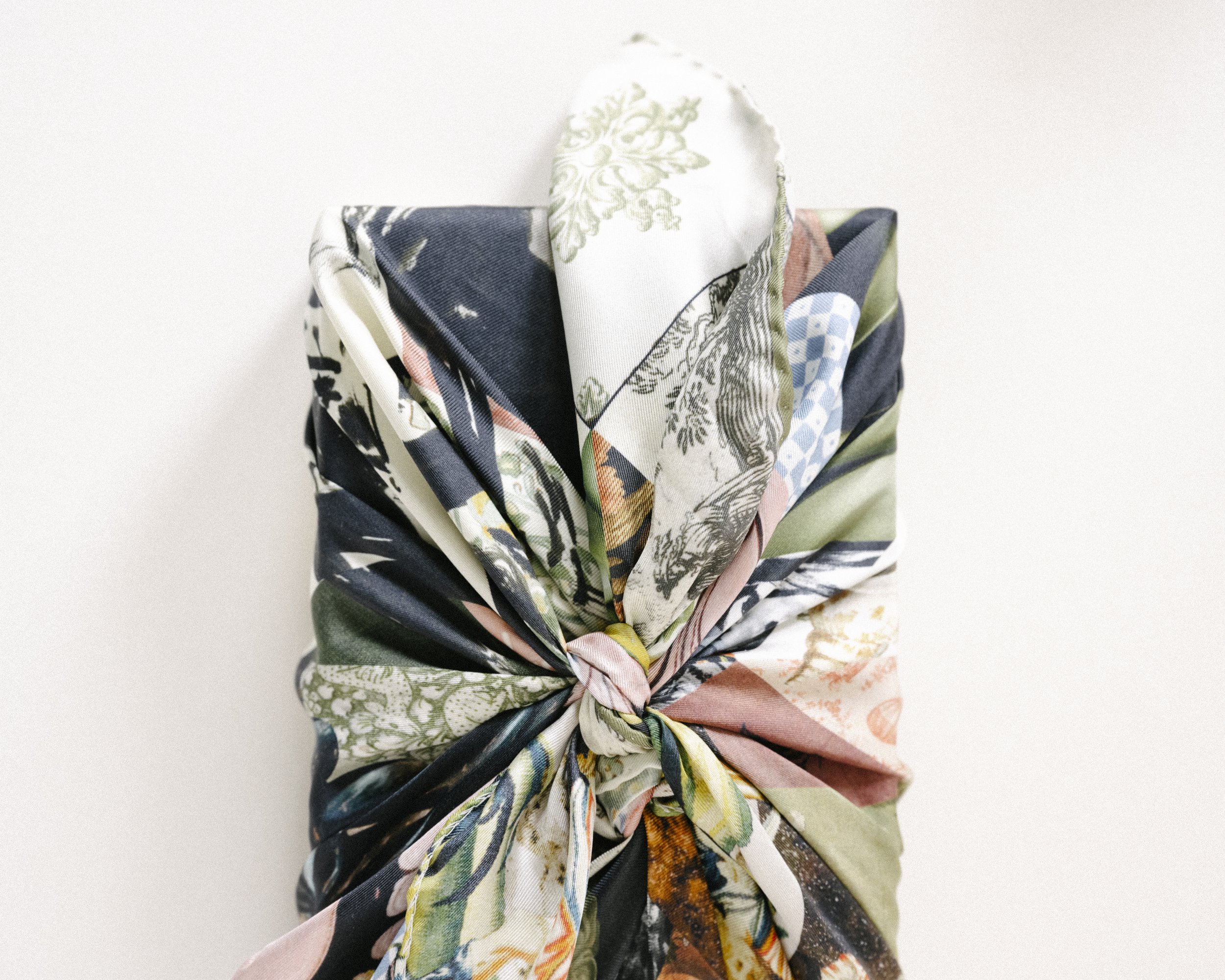
Fabric wraps transform the act of gifting into a ceremonial gesture. Their roots extend far beyond our modern times. They originate in the Japanese art of Furoshiki, a tradition passed from Buddhist monks to aristocrats, from aristocrats to the samurai, and eventually to all people.
The Era of Tsutsumi & Hiratsutsumi
In the city of Nara, which once stood as the imperial capital of Japan, towering wooden temples guarded some of the nation’s most treasured objects. Within the Seven Great Temples, bronze sceptres, incense containers, musical instruments, and monks’ garments were preserved with great care. Ceremonial items were stored in nearby logs, or they were ritualistically buried beneath the platforms of the main halls. But certain pieces were wrapped carefully in decorated silk or delicate washi paper. This act of wrapping, known during the Nara period (710–784/794 AD) as Tsutsumi, was not a practical gesture alone or a protective measure against dust and insects. It was a ritual of purification, both physically and spiritually. To wrap was to purify, to cleanse; a strictly ceremonial activity.
When the imperial capital was transferred to Heian-kyo, which is modern-day Kyoto, a new era began. Japan’s Golden Age (794-1185 AD) was marked by the creation of the Kana script, inspiring a period of cultural enlightenment. Poetry, calligraphy, and aesthetics flourished during that period. The aristocracy distinguished themselves through layered garments crafted from luxurious materials, and silk fabric wrapping gradually extended beyond ritual use.
Tsutsumi evolved into Hiratsutsumi. What had once served primarily as a means of purifying sacred objects became an elegant way to carry personal belongings. In time, with the rise of the samurai class, fabric wraps had a more practical function. Designed to endure travel and the demands of military life, delicate silk gave way to sturdier linen and hemp.
The Art of Furoshiki
From Buddhist monks, to aristocrats and later to the samurai, the use of fabric wraps was eventually passed on to the rest of Japanese society. During the Edo period (1603-1868), bathhouses were communal spaces where social hierarchies often vanished. Men and women of different classes shared those spaces equally. Bath spreads were now necessary to hold one’s clothing while bathing, and it was then that fabric wraps became an integral part of Japanese culture.
The Tsutsumi and Hiratsutsumi were now called Furoshiki — bath spreads — which were used not only in the bathhouses but also for transporting items and gifts. Furoshiki fabric wraps carried various patterns and motifs, such as cherry blossoms, arabesque vines, geometric designs, and even family crests. The chosen fabric reflected both status and purpose: refined silk for formal occasions, durable cotton or hemp for everyday use.
Eventually, the art of Furoshiki was replaced by plastic bags in the 20th century. In 2006, the tradition resurfaced when Yuriko Koike, Japan’s Minister of the Environment, launched the “Mottainai Furoshiki” campaign to promote fabric wraps as a reusable alternative to plastic. Furoshiki was now recognised across the globe, inspiring the use of high-quality, decorative fabric wraps for gifting.
Turning Gifting into a Ceremonial Gesture
Furoshiki-inspired fabric wraps are not only sustainable but also transform the act of gifting into an artform and a ceremonial gesture. Wrapping a gift in decorative silk fabrics requires dedication and care. The soft texture slows down your movements, allowing you to enter a meditative state. The gift instantly appears thoughtful and personal.
Manuela Menzi Studio offers fabric wraps for various occasions. Each fabric wrap features an original collage design that has a story to tell. Our fabric wraps can be stored and reused or repurposed as foulards and accessories.