
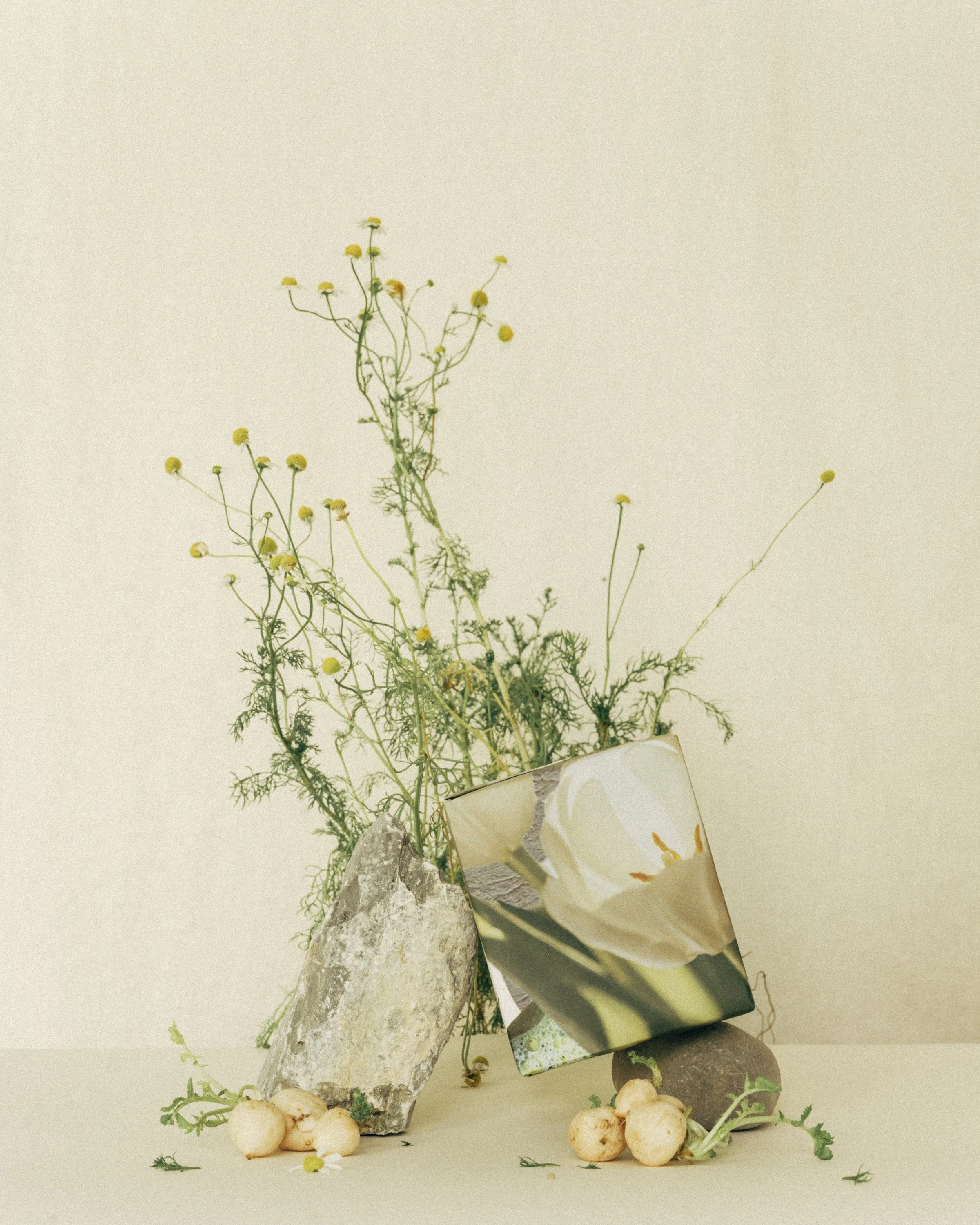
 Image 1 of 2
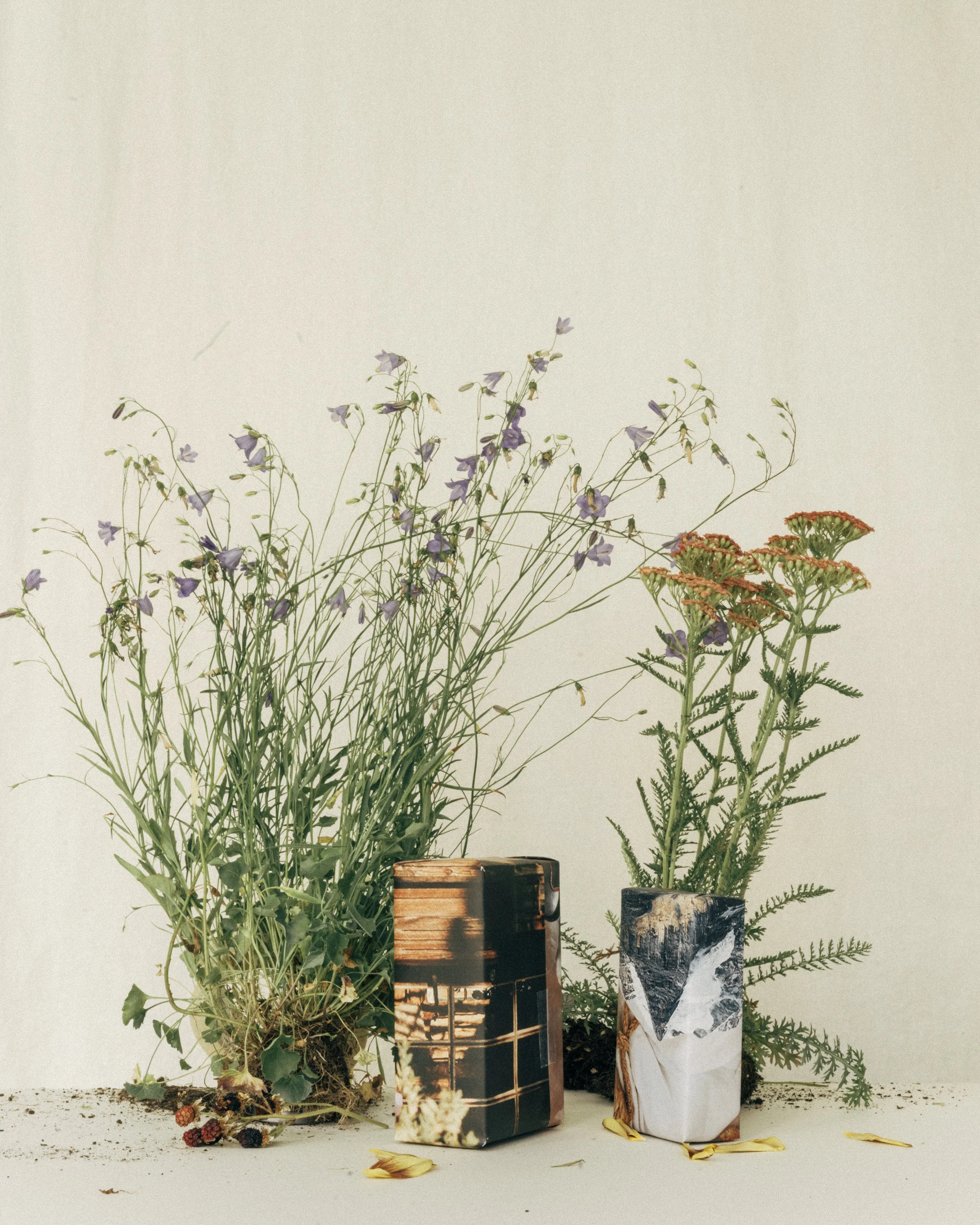 Image 2 of 2
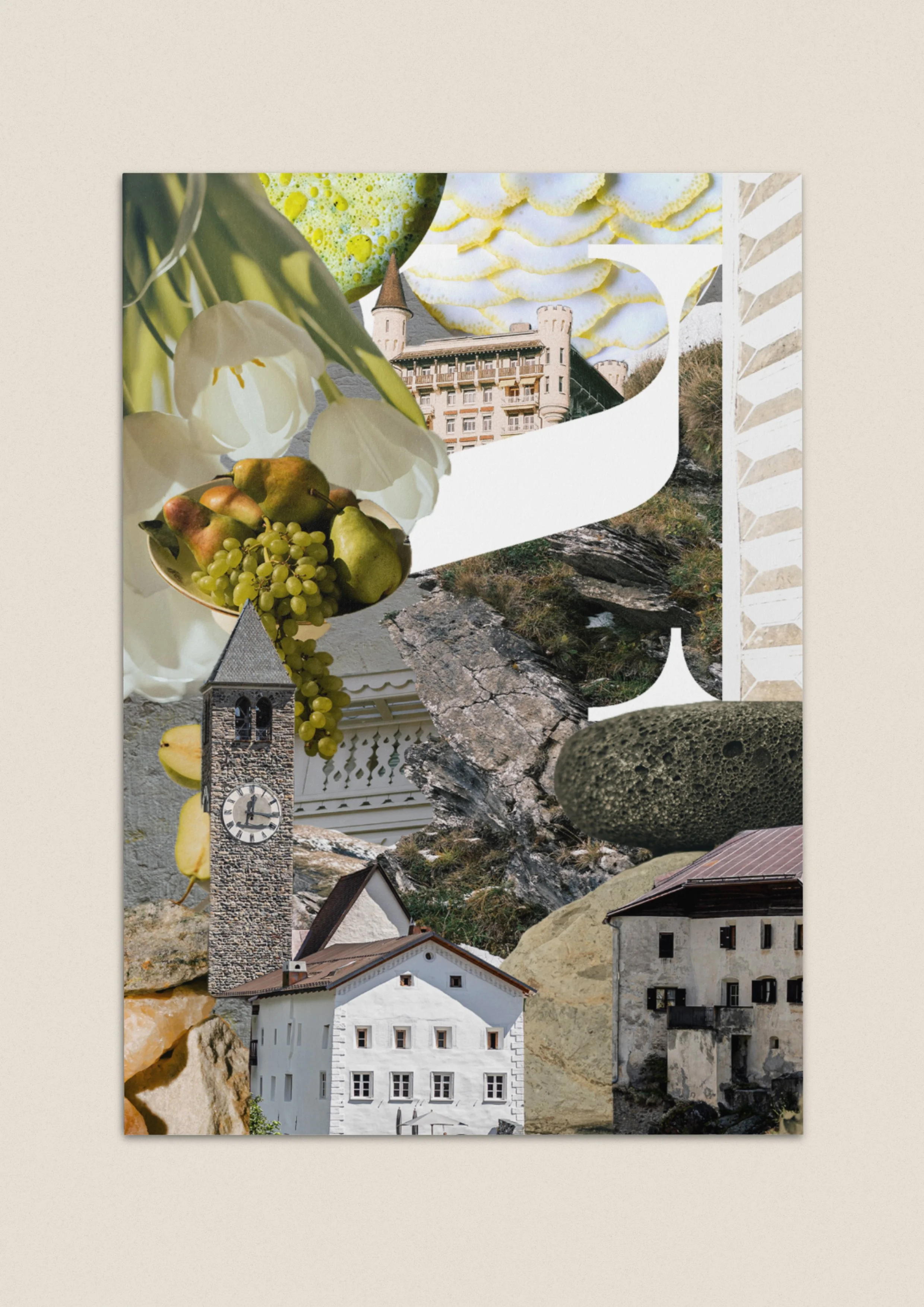
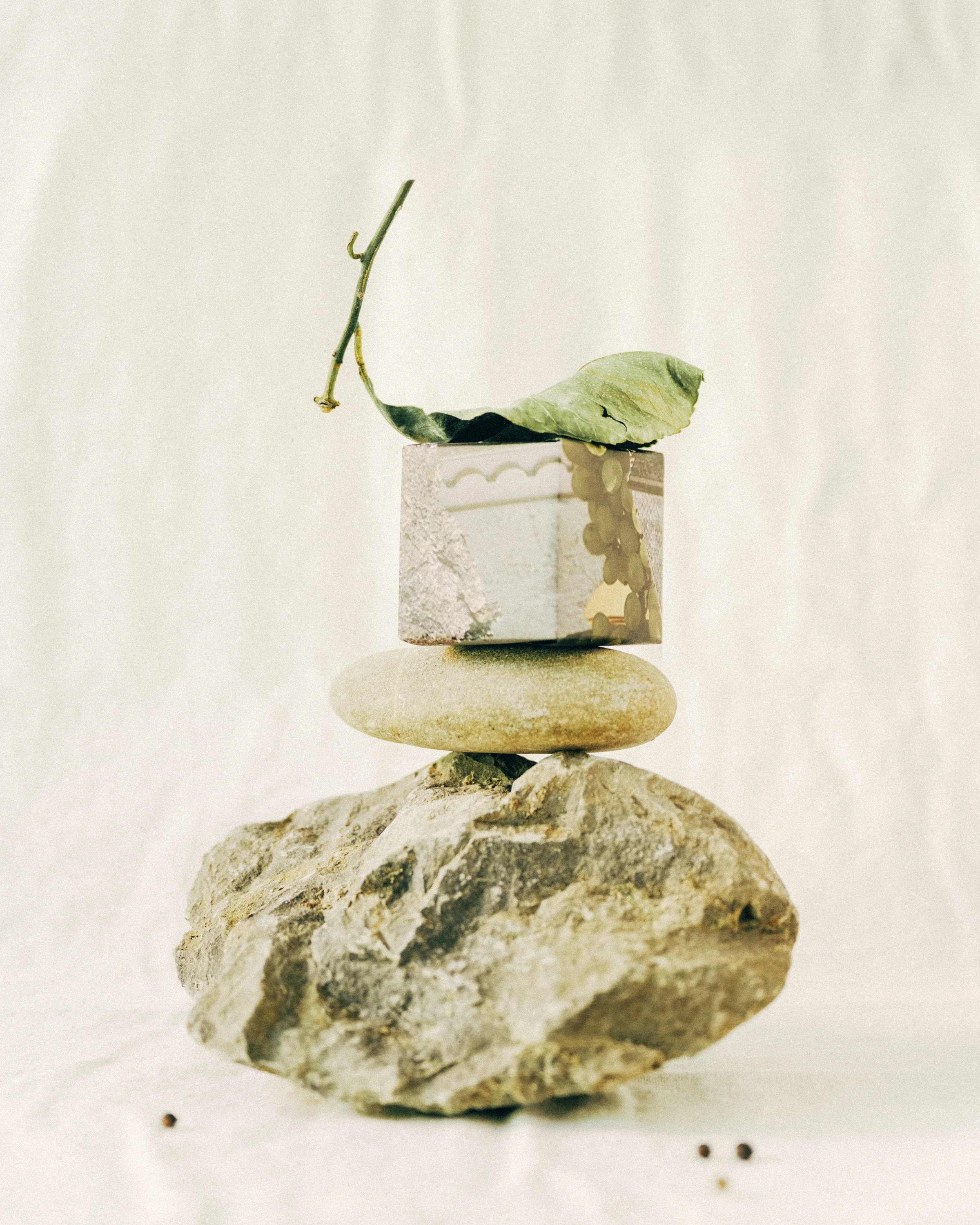
Chateau
This design was inspired by the mountains behind the chateau, rock and old snow, unchanged on any map from fifty years ago. Below them, the houses of the Engadin carry sgraffito. Builders cut through a top layer of white lime, exposing the grey plaster beneath. The pattern goes in wet, before the lime dries, sometimes a date, sometimes a border, sometimes nothing more than a repeated line. It has been done this way since the sixteenth century. Windows sit small and set deep into the wall. Thick stone kept the cold out through winters before central heating existed. Some houses show the plaster gone at the corners, stone underneath, worn back by weather rather than restored.
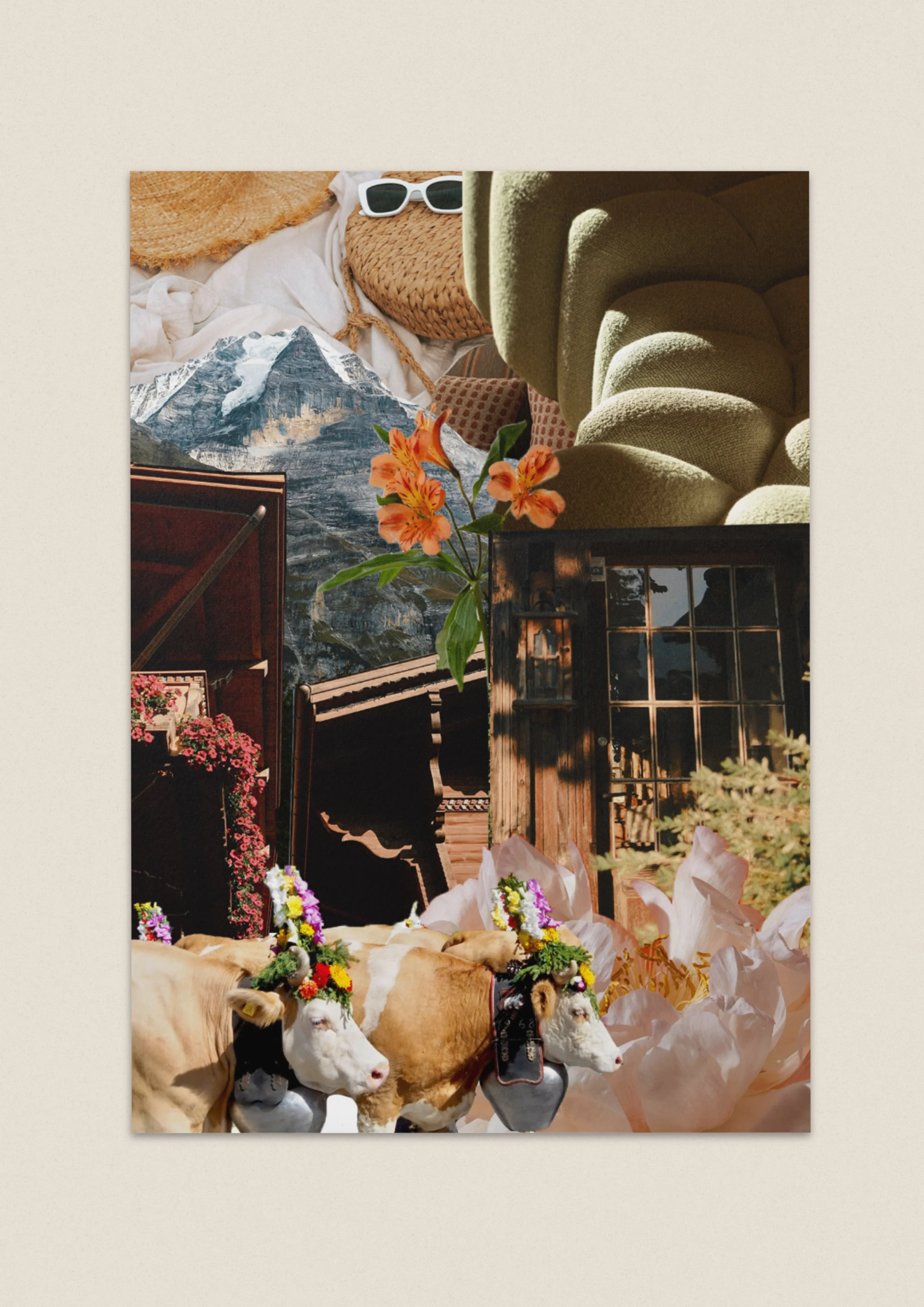
Chalet
Here we got inspired by the flowers of Switzerland, the ones that grow wherever people or altitude allow them. Alstroemeria and marigold cross the pasture, woven into collars for the cows walking between grazing grounds each summer. Alpenrose crowds the rock further up the slope, low and pink, one of the few flowers that holds its colour above the treeline. Lower down, geraniums fill window boxes on every balcony in the valley, red and pink, planted new each spring, the same choice made without much discussion from one house to the next.
DETAILS
SET
3 rolled sheets
A2 420 × 594 mm
SIZE
PAPER
100 g/m², uncoated offset
FINISH
Matte
PRINTED IN
Germany
-
FREE WORLDWIDE SHIPPING ON ALL ORDERS
Orders are usually shipped within 2–3 working days, and international shipping is available.
Please note that customers may be subject to customs duties in their respective countries, which are their responsibility.
You can also pay directly via TWINT.
You’re also welcome to pick up your order directly from the studio in Meilen. Important: Please call or text ahead to arrange a pickup time. This ensures I’m at the studio and have your order prepared.
-
Handle with clean, dry hands to keep the print looking its best. Store flat in a drawer or re-roll and secure with a ribbon, not with tape. Keep away from direct sunlight to preserve the colours over time.
Read more here
EDITION
This design is produced in a limited edition of 50 pieces.
AVAILABLE
47 of 50 remaining
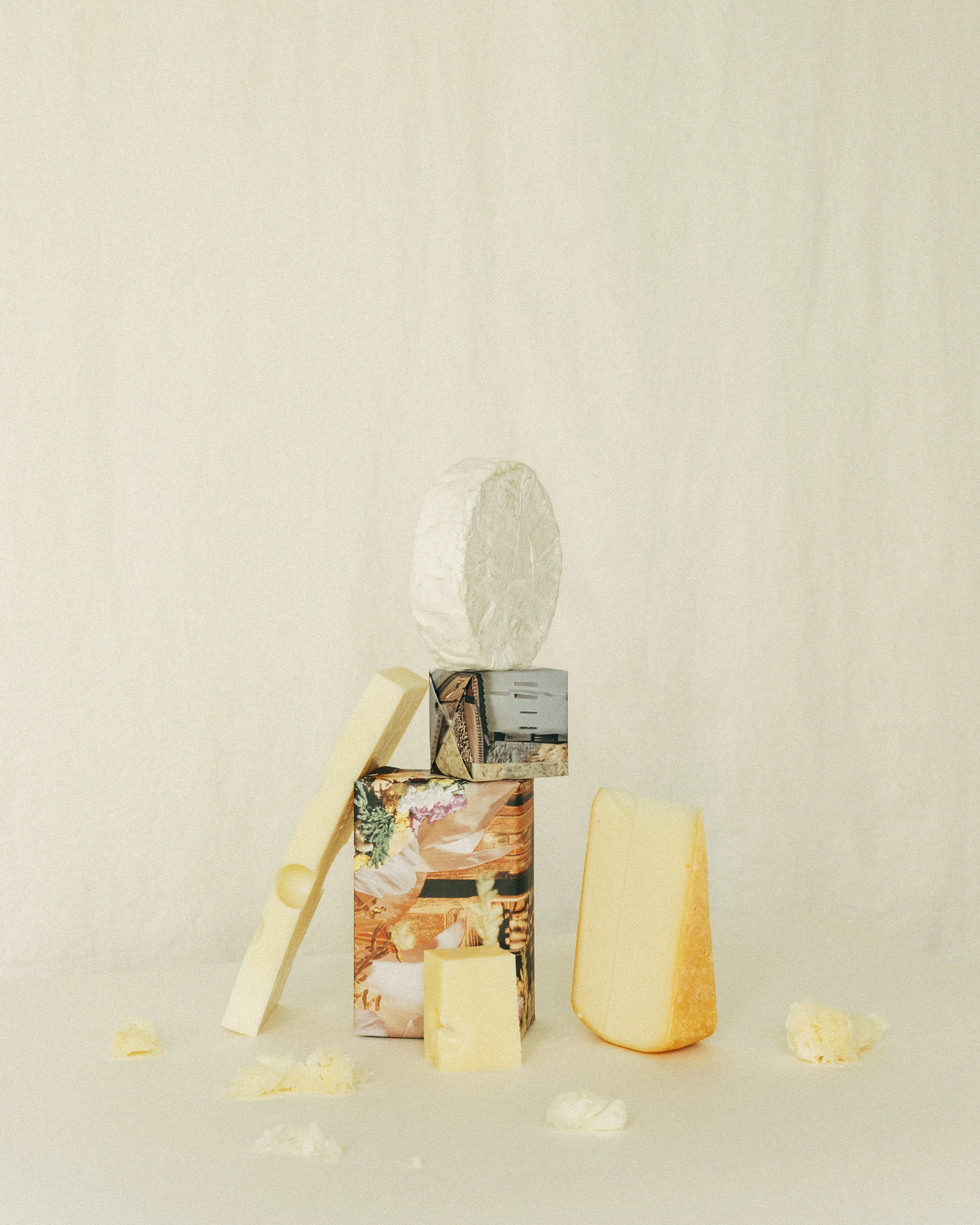
The set contains three sheets of wrapping paper, each one double sided, Chalet on one side, its counterpart Chateau on the other.
PAY WITH TWINT
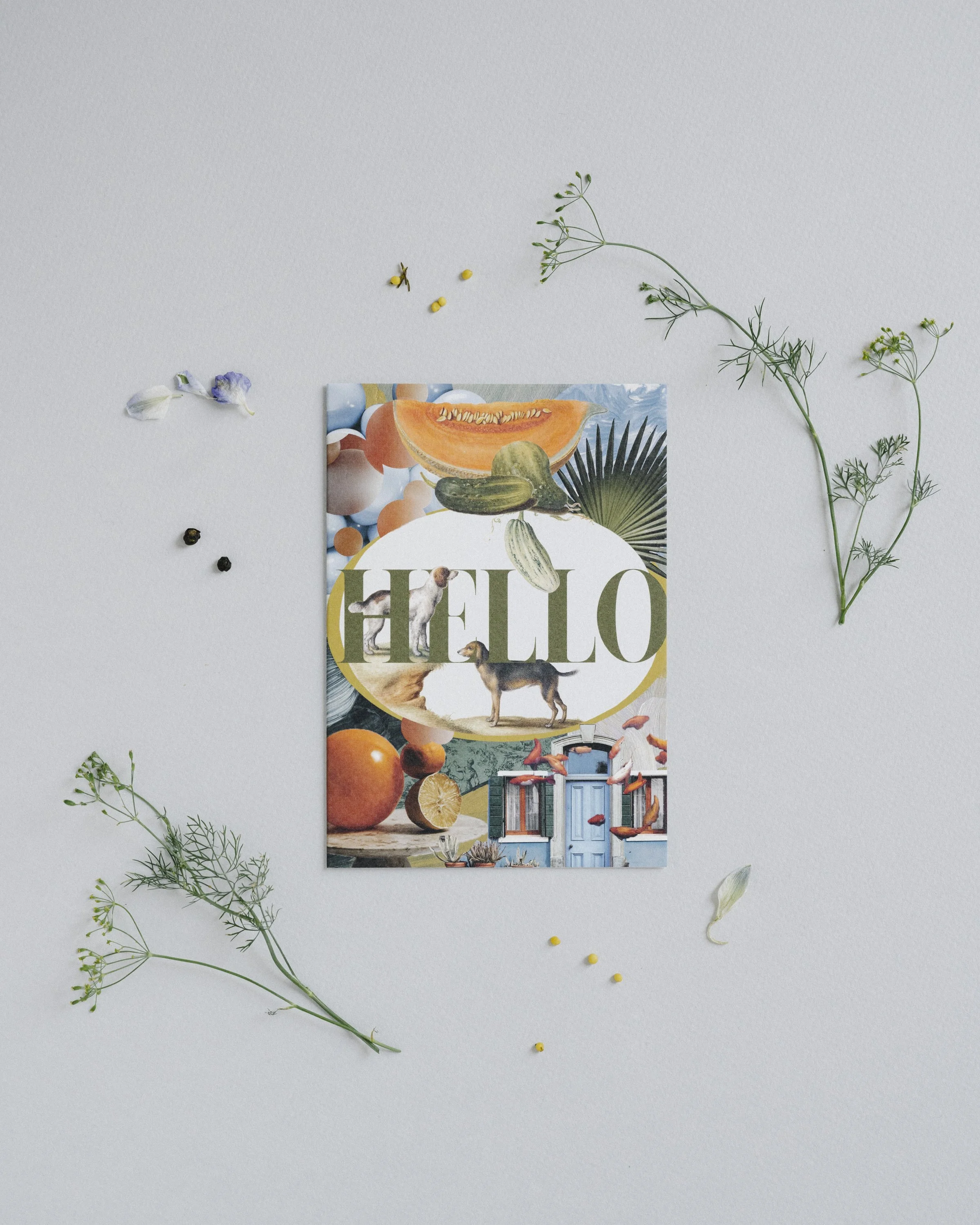
When we started looking for a way into this card, we kept coming back to the word hello. It is younger than you might expect. Only about 150 years old, invented for the telephone, a practical solution for a new and awkward device. Nobody knew what to say, so someone decided. Hello.
What interests us is how much it can carry. The hello shouted across a car park. The one that arrives after years of silence. The one said quietly to a new colleague on their first morning, before anything between you exists yet. One word, doing completely different work each time.
A hello doesn't need to be glamorous. Cleopatra ate pickled cucumbers daily, convinced they were the source of her beauty and her strength. Not roses, not gold, not anything particularly glamorous. A cucumber. It is simply the most unlikely thing to put on a greeting card. Nobody chose it for beauty or symbolism. It is just ... there. A bit awkward. A bit odd. Completely unbothered about being on a greeting card.
Not only did she love pickled cucumbers, we like to think she had dogs too.
There is an old belief that the souls closest to us find each other again. Not always as humans. Sometimes as something else entirely. These two knew each other once, in another life, as something other than a spaniel and a hound. And that one ordinary day, on an ordinary walk, they turned a corner and there the other one was.
Just: hello.
PAIRS WELL WITH

PAY WITH TWINT
For most of human history, birthdays belonged only to kings and saints. Ordinary people were born, grew older, and said nothing particular about it. Most didn't even know their exact date. It wasn't recorded, wasn't kept. It wasn't until the industrial revolution that birth dates began to be written down for everyone. And once written down, they could be celebrated.
The candles came much earlier. In ancient Greece, people brought honey cakes to the temple of Artemis, goddess of the moon, the hunt, and of childbirth itself. The cakes were called amphiphon, meaning shining on both sides. Round like the moon, with candles placed all around the edge. It was not just a wish. It was a thank you. For the birth itself.
We kept the candles. We kept the wishes. We added the gifts. And somewhere along the way, we added the gift tag.
It is the last thing you do. The gift is chosen, wrapped, ribboned. And then you sit down with a small piece of paper and a pen and try to find the right words. Not many. There is no space for many. Just enough to say what you mean, in the handwriting that the other person will recognise before they have even read it.
It arrives first. Before the gift itself. The smallest part of the whole gesture. Written last, read first.
PAY WITH TWINT
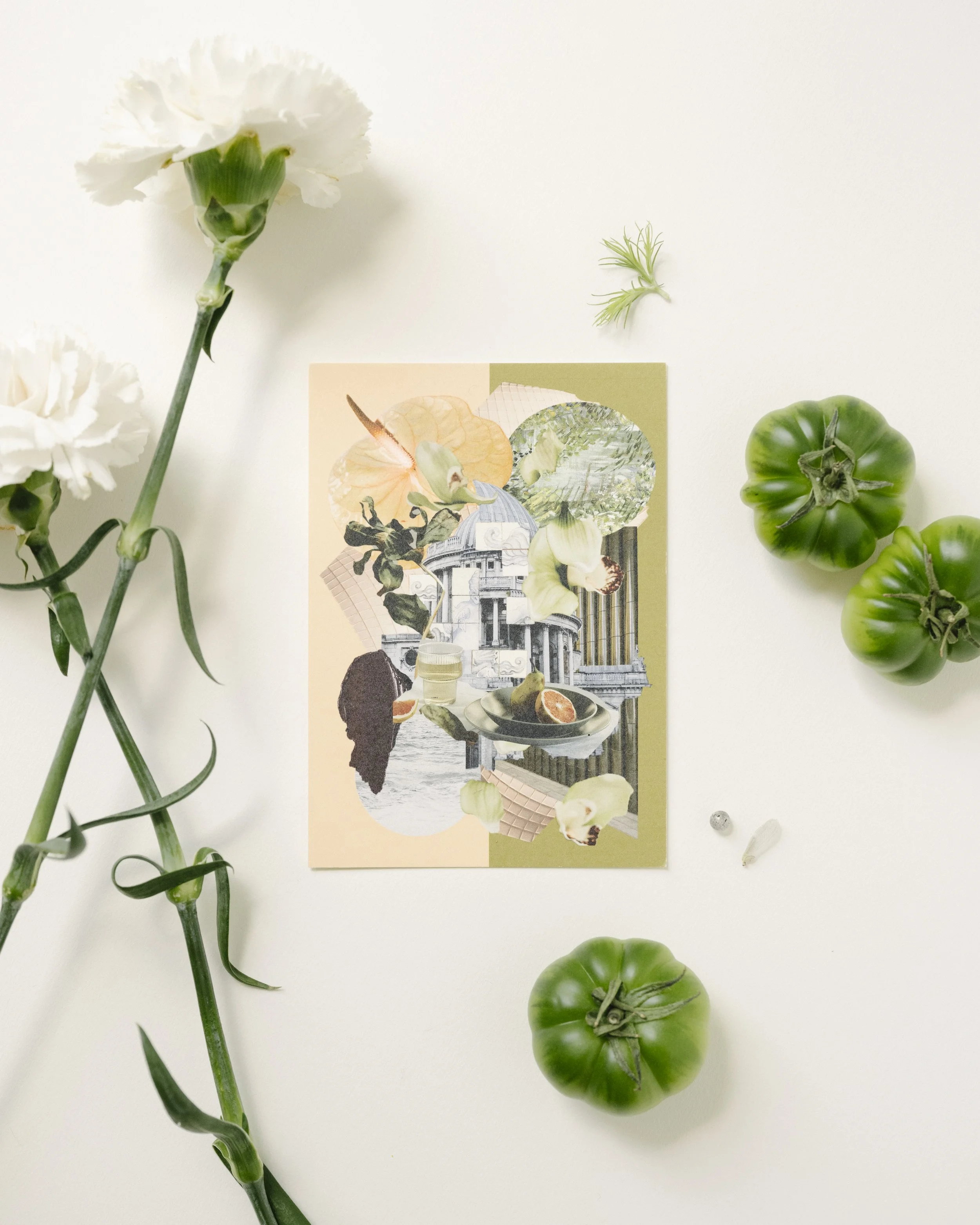
Salt wind arrives before anything else on these cliffs. It finds gaps in the church windows, cracks between stones, the hinge she never fixed on the greenhouse against the south transept.
Nothing else grows here. That was the rule she set for herself thirty years ago and has never once broken, not even for the roses everyone assumes a church garden needs. Orchids only. Not the kind lined up in pots on a windowsill. Hers climb. They hang from the roof beams on threads of root, gripping stone that was never meant to hold anything alive. Some wedge into the gaps where mortar has crumbled away, no bigger than a fingernail. Others sprawl the length of a transept wall, decades of growth nobody trained or trellised, left to decide its own shape.
She doesn't call it a collection. A collection implies order, implies she chose each one and placed it where she wanted it. What she has is closer to a population, thousands of plants she has mostly just allowed. An orchid seed is smaller than dust and needs almost nothing to take hold: a crack in stone, a pocket of moss, the bark of another plant. Once she understood that, she stopped potting them. She started giving them places to land. The church, with its ledges and joints and centuries of small imperfections, turned out to be exactly the kind of ruin an orchid hunts for.
No two mornings inside these walls look the same. A species that has shown nothing but leaves for six years might flower overnight above the choir stalls, and she'll only know because she happened to look up while carrying water somewhere else. She has stopped trying to track them all in a single log. There are too many, growing in too many directions, keeping their own time. Instead she moves through the building slowly, most days, scanning walls and beams the way you'd scan a crowd for one face, not expecting to find it, unwilling to be the one who wasn't looking when it finally shows itself.
Visitors sometimes ask why she never added anything else: a hedge, a tree, something to hold colour between blooms. She tells them the same thing every time.
Nothing else grows here.