
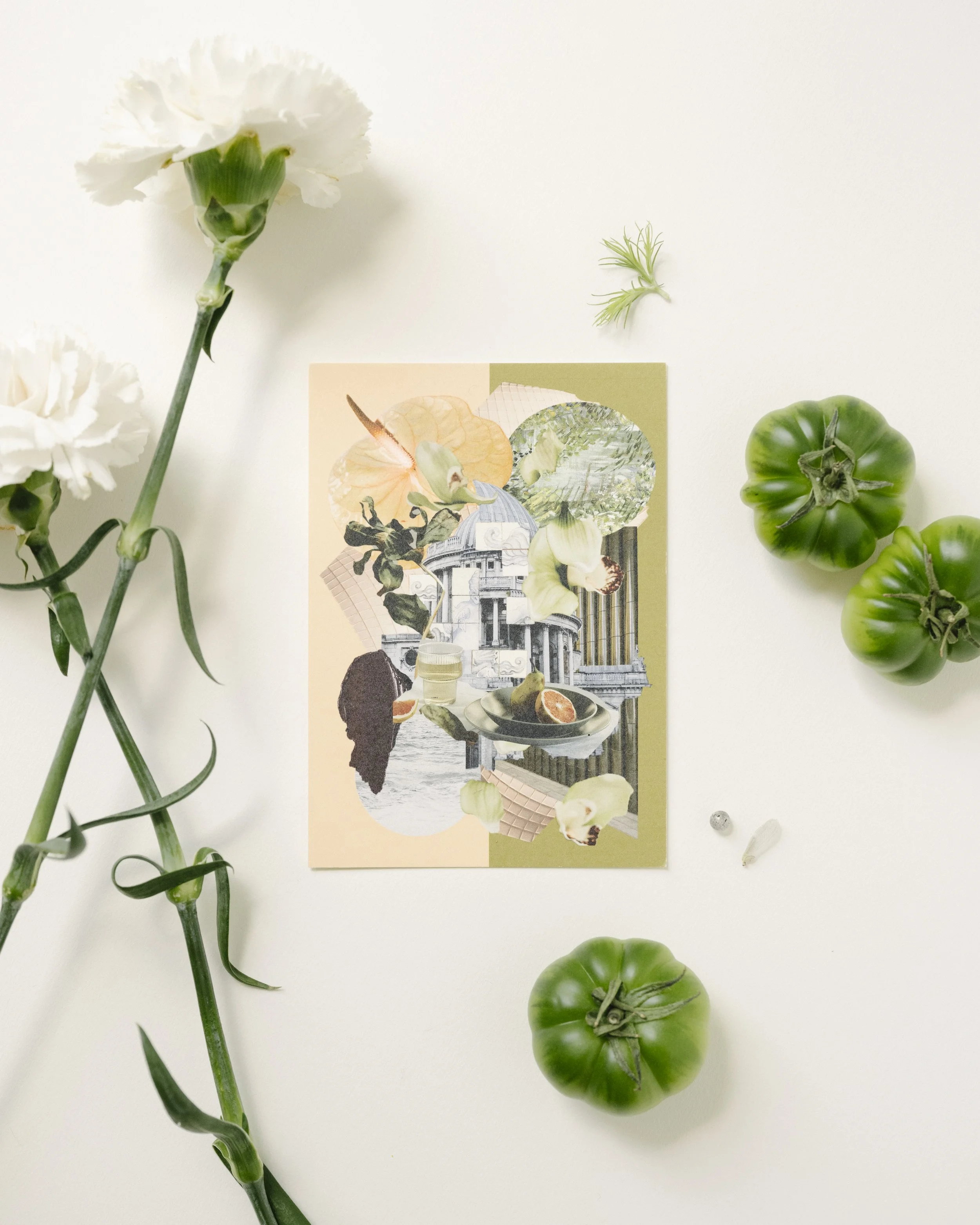
 Image 1 of 2
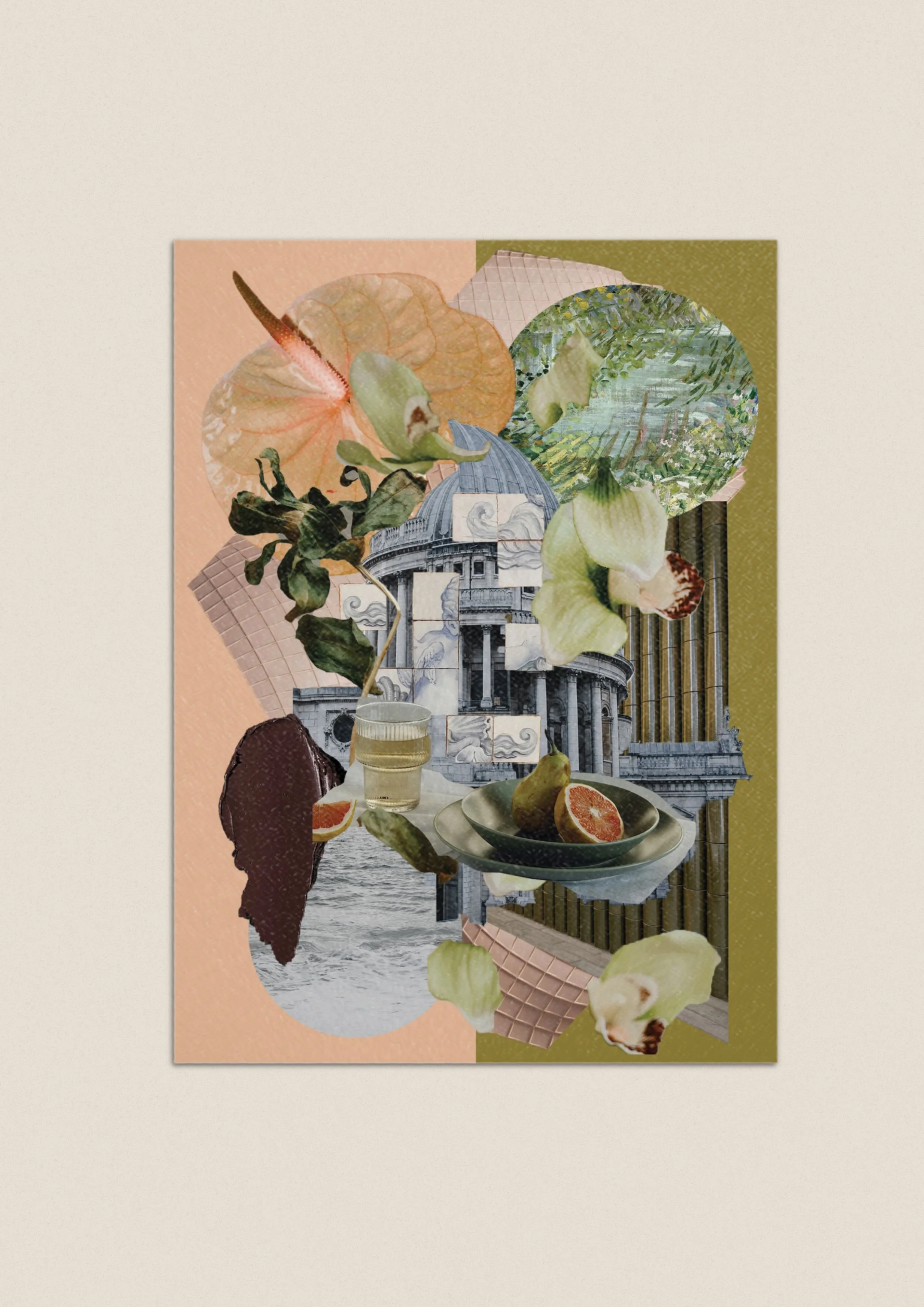 Image 2 of 2
DETAILS
SIZE
A6 10.5 x 14.8 cm
BACKSIDE
Blank for your message
Soft and uncoated, that welcomes ink and holds it well
PAPER
MADE IN
The UK
-
FREE WORLDWIDE SHIPPING ON ALL ORDERS
Orders are usually shipped within 2–3 working days, and international shipping is available.
Please note that customers may be subject to customs duties in their respective countries, which are their responsibility.
You can also pay directly via TWINT.
You’re also welcome to pick up your order directly from the studio in Meilen. Important: Please call or text ahead to arrange a pickup time. This ensures I’m at the studio and have your order prepared.
-
Handle with clean, dry hands to keep the print looking its best. Store flat in a drawer. Keep away from direct sunlight to preserve the colours over time.
Read more here
PAY WITH TWINT
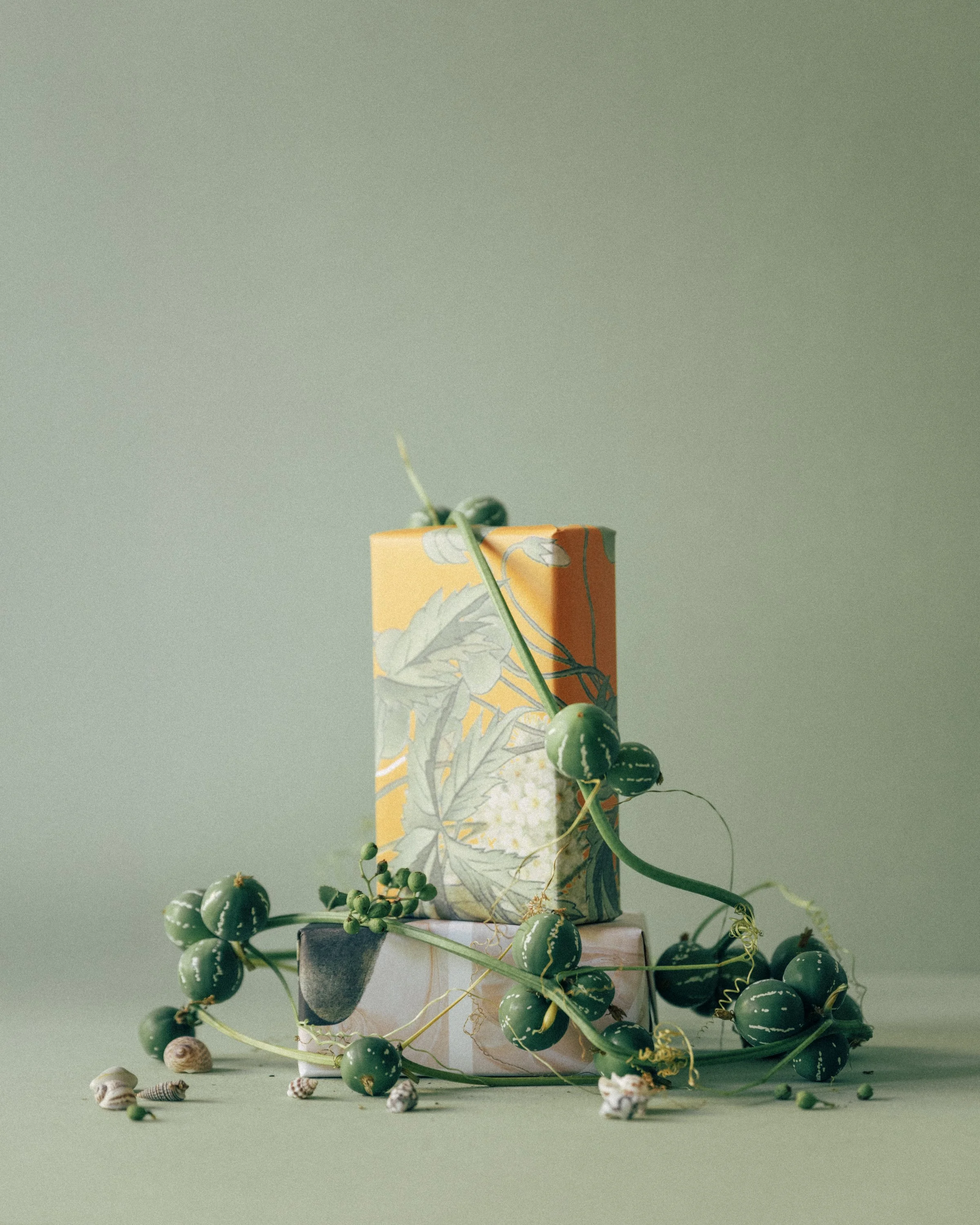
In a drawer lined with faded velvet, in the basement of the natural history museum, someone once arranged the world by colour and weight. The compartments run in neat rows and columns, a grid built to hold what might otherwise scatter. Shells from the Mediterranean lie numbered, side by side. Three ceramic vessels from Athens, fourth century BC, provenance unknown, stand slightly apart from everything else, as though still waiting to be placed. A botanical drawing of Citrus aurantium, hand painted in ink and wash, Florence, 1743, its colours still true, lies flat beneath glass. Beside it, a dried citrus branch, the fruit still attached, brittle now as paper. Citrus peel, curled and hardened with age. A pressed sprig of bitter orange blossom, its petals gone the shade of old paper.
We built our own version of that drawer for "Something About a Grid," and filled it with sage and moss. A tangerine branch traces its own line across the paper. Shells curl into the corners. The grid holds them all in place, the way the drawer once did.
Long before this drawer was built, someone else kept a version of it on her desk. Maria Sibylla Merian, born in Frankfurt in 1647, learned to paint from her stepfather, a still life artist, and turned that eye toward something almost no one studied then: insects. Her studio held rows of glass jars, each one holding a caterpillar mid change, light falling across her worktable from a window she kept angled just so. Beside the jars, cuttings stood in shallow water, roots trailing pale threads beneath the surface, flowers open at every stage from bud to drop. She ground her own pigments. She mixed her own inks. And she returned to the same jar day after day, sketching each moult until the moth broke free, always beside the very plant that fed it.
Among the sketches she kept pinned above her desk, one image was said to return to her again and again, though it would not be painted for another century: a girl tying willow fronds into a bundle for Palm Sunday, headscarf burning orange against green. When Kanuty Rusiecki finally set that scene on canvas in 1844, titling it Lithuanian Girl with Palm Sunday Fronds, sage and moss and the deep shade of fern under low branches, he painted the same devotion Merian gave her insects and roots.
Maria pins the last sketch to the wall, closes the drawer of dried specimens, and turns down the lamp.
PAIRS WELL WITH
PAY WITH TWINT
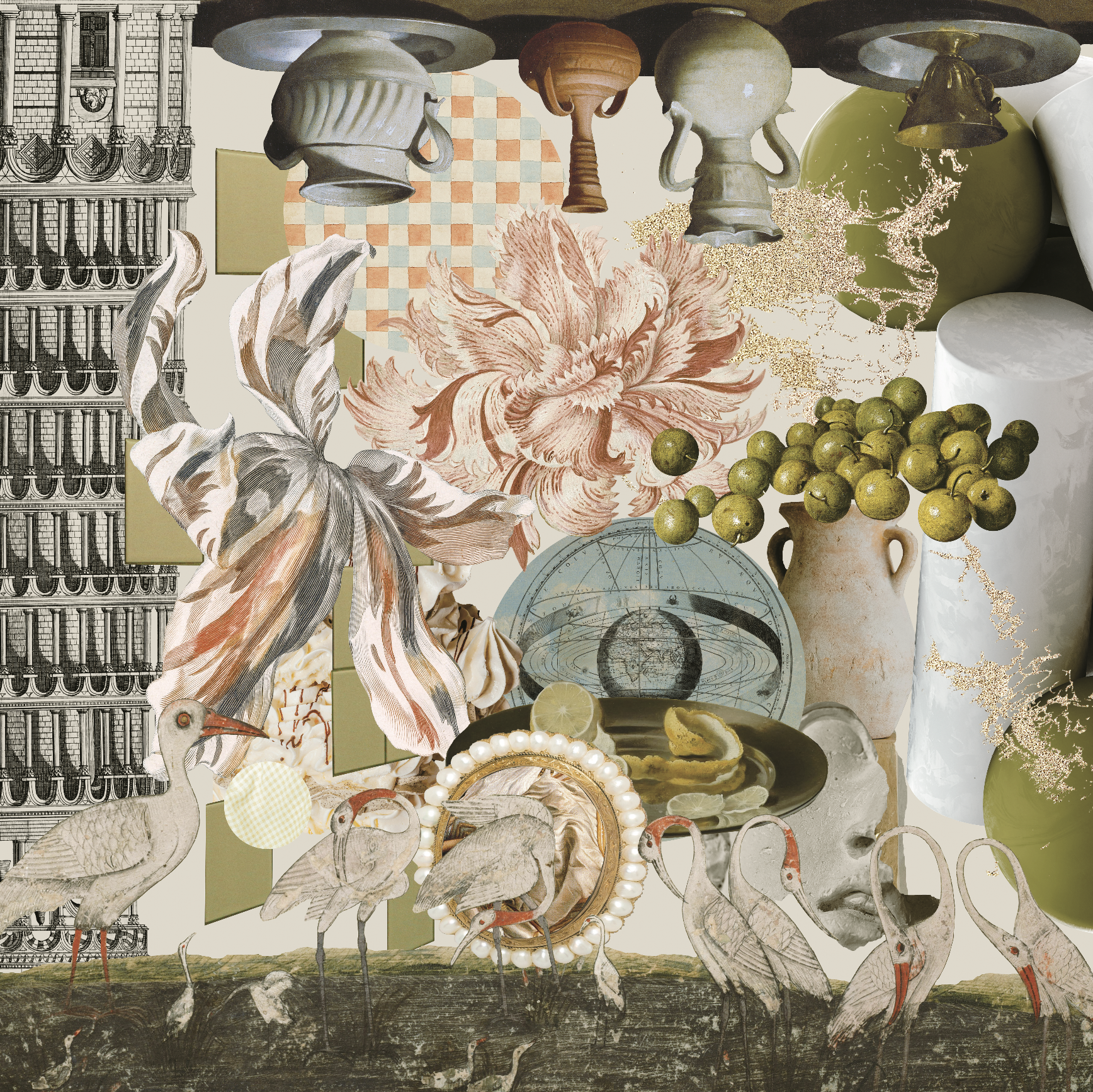
Inspired by the 17th-century Indian tempera painting The Attractions of Music, this design reimagines the artwork’s meditative harmony between nature, ornament, and human expression. The white storks, borrowed from the original composition, moving through a dreamlike landscape. The birds act as keepers of stories, drifting silently through ruins, gardens, and fragments of forgotten worlds. Around them, overturned vessels, architectural remnants, celestial diagrams, pearls, fruits, and faded ornamentation appear like relics carried across centuries traces of trade, ritual, celebration, and cultural exchange dissolved into dream.
Influenced by the decorative borders and layered symbolism characteristic of Indian court paintings, the piece blends antiquity with surrealism, creating a floating world where mythology, memory, and nature coexist in delicate equilibrium. A meditation on preservation, ornament, and the poetry of collected fragments.
Made from lyocell, the fabric wrap is exceptionally soft and gentle against the skin. Its generous size allows it to drape beautifully - worn as a wrap, a shawl, or loosely over the shoulders. The fringed edges finish it simply and naturally.

Introducing The Evergreen Tapestry wrapping paper, a beautiful blend of nature’s charm and classic artistry. Inspired by the rich history of ancient tapestries, this design brings together elements that feel both timeless and modern. Tapestries were once used to decorate castles, tell stories of historical events, and symbolise wealth and power, often commissioned by royalty and hung on the walls of grand halls.
Perfect for the fall and winter seasons, The Evergreen Tapestry lets you own a piece of this storied tradition or bring it with you to the next birthday party, turning every gift into a work of art.