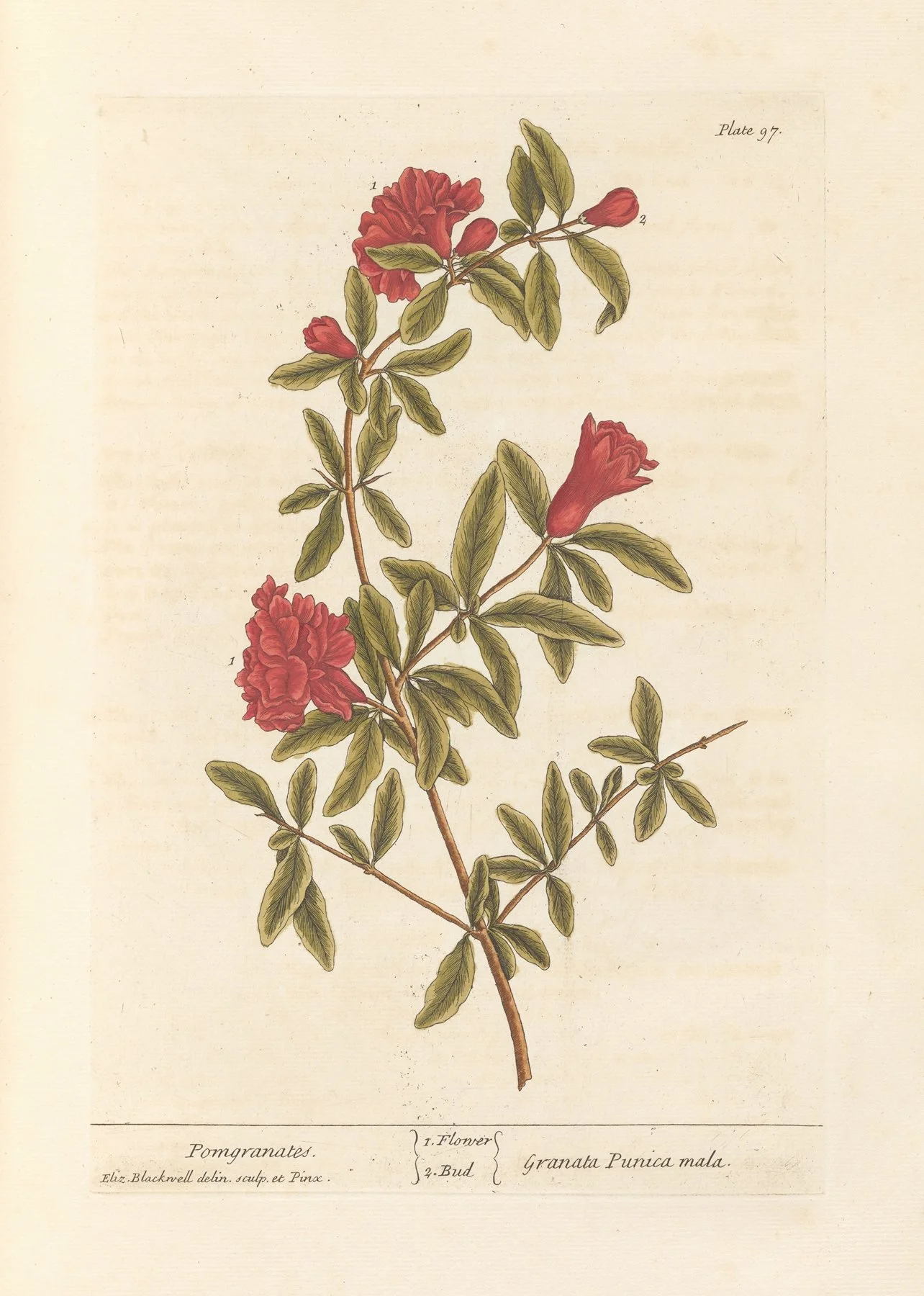
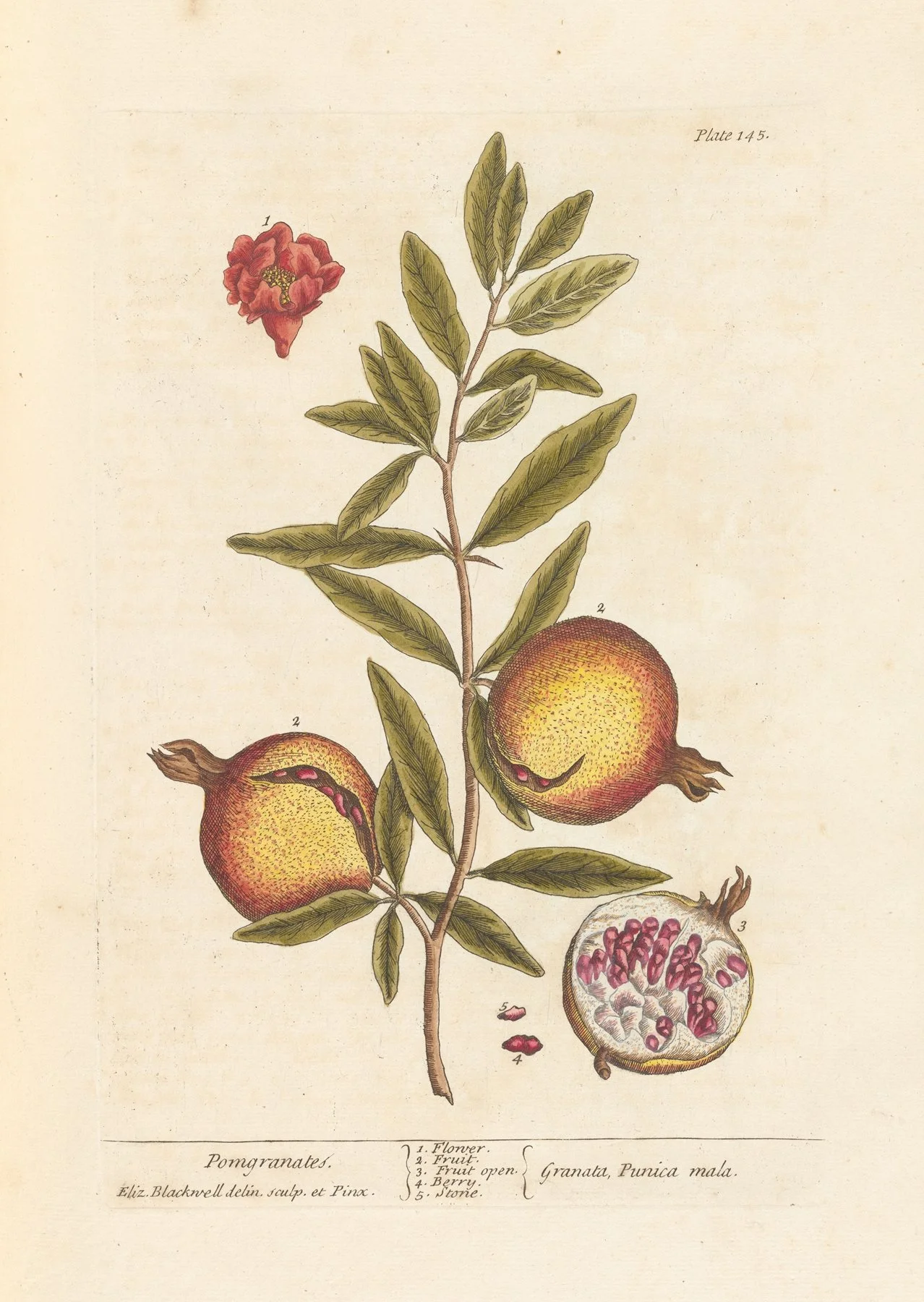
An old story tells of Persephone, daughter of the harvest goddess Demeter, gathering wild blooms in a meadow. Suddenly the earth fractured beneath her feet, and she slipped down into the shadow kingdom of Hades.
The Greek god asked for her hand in marriage, proposing that she would be the queen of everything buried within the Earth, rather than what grows on its surface. When she protested, she was offered pomegranate seeds. Unknowingly, by tasting its glistening, jewel-like seeds, she bound her fate to the depths of the earth.
For millennia, the pomegranate has carried the rhythm of the changing seasons…
To open the fruit and release its seeds is to witness the natural cycle of agriculture; the quiet hibernation of winter before the sudden, vibrant awakening of spring. Rich and red as lifeblood, the flesh of the pomegranate holds the bursting potential of renewal. It remains a promise that life will always return to the soil; that Demeter will let the earth bloom once more when she is reunited with her daughter.
This promise of light returning to the darkness is precisely why the pomegranate has become an enduring symbol across our midwinter celebrations…
In Greece, this ancient connection to the soil is kept alive through a New Year’s tradition. As the clock strikes midnight, a pomegranate is smashed against the doorstep of the home. A cascade of crimson seeds scatters across the floor; the further they scatter, the more abundant the health, joy, and good fortune the coming year will bring to those inside. The same tradition is often followed in Turkey.
The fruit migrates into western Christmas traditions. Its deep hue is a natural companion to festive evergreen boughs. Tucked into wreaths or placed at the centre of the holiday table, it serves as a sensory reminder of everlasting life amidst the frost.
In early Christian art, Botticelli and the Renaissance masters painted the fruit cradled in the hands of the Madonna, viewing its tightly bound, hidden seeds as a beautiful metaphor for a community united in spirit.
Across the Mediterranean and into the Levant, the pomegranate remains a sacred anchor for the new year. During Rosh Hashanah, it is eaten with the wish that blessings may be as numerous as its seeds, traditionally believed to number exactly 613, mirroring the core virtues of life. Further east, in Armenia, it stands as a national symbol of resilience. It is presented in winter weddings to wish couples a fertile, enduring future.
On Shab-e Yalda, the longest night of the year, Iranian families stay up until dawn to protect each other from the dark. They eat pomegranates, watermelons, and nuts while reading the poetry of Hafez. The crimson colour of the pomegranate symbolises the glow of life and the dawn that will inevitably conquer the long winter night.
The pomegranate is so deeply rooted in Spanish identity that it is the namesake of the ancient city of Granada. The open fruit appears on the city's coat of arms, local architecture, and even on the official coat of arms of Spain itself. In local Andalusian folklore, planting a pomegranate tree at the entrance of a garden ensures that love and wealth will never leave the home…
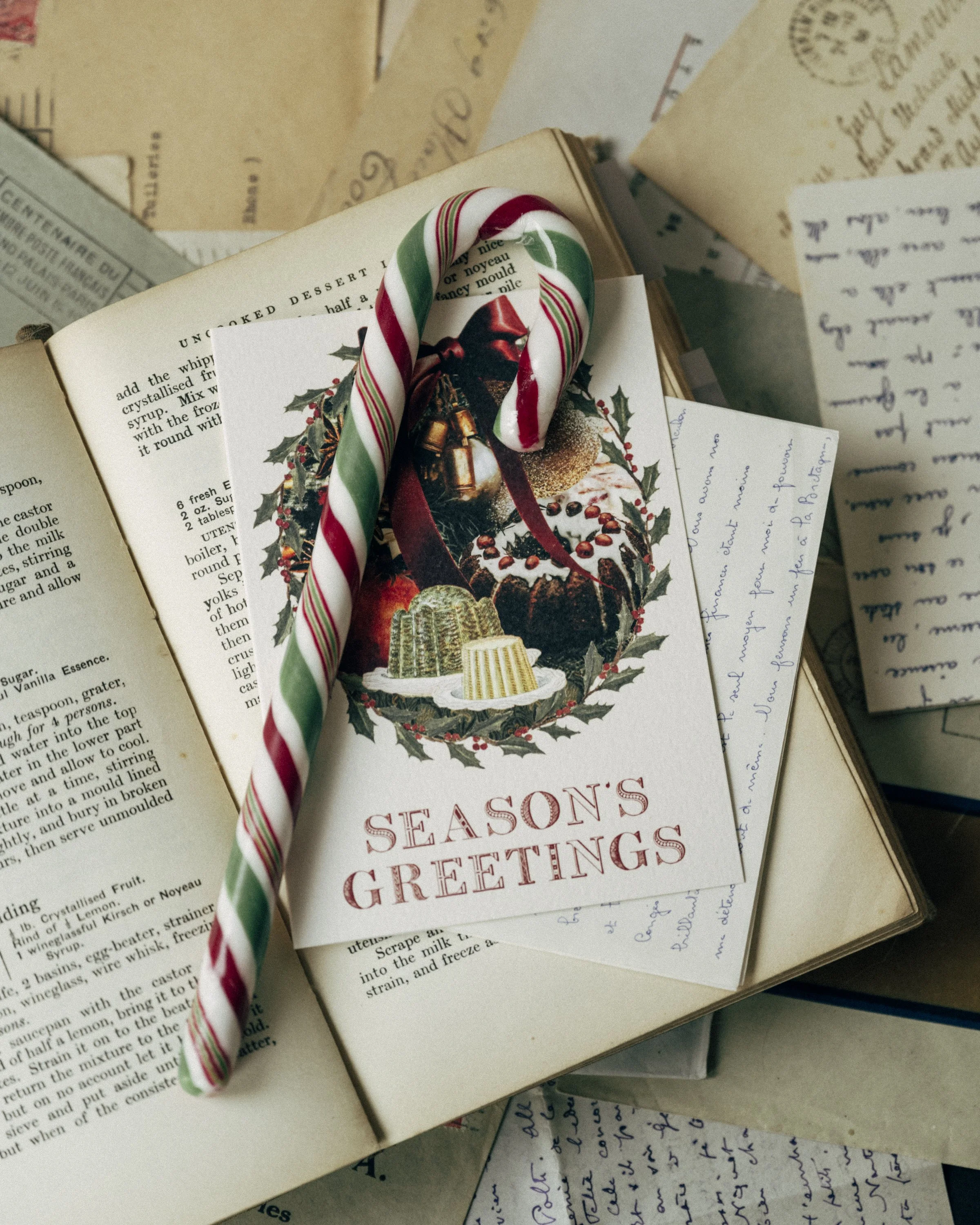
“Season’s Greetings”
In a willow basket on the floor, a pile of pomegranates waits its turn. Candied orange peel glistens in a tin, and the cookies wait in layers of parchment, ready for the table.
Write it slowly. Seal it, stamp it, send it out into the cold.