
 Image 1 of 1
DETAILS
SIZE
A6 10.5 x 14.8 cm
BACKSIDE
Blank for your message
Soft and uncoated, that welcomes ink and holds it well
PAPER
MADE IN
The UK
-
FREE WORLDWIDE SHIPPING ON ALL ORDERS
Orders are usually shipped within 2–3 working days, and international shipping is available.
Please note that customers may be subject to customs duties in their respective countries, which are their responsibility.
You can also pay directly via TWINT.
You’re also welcome to pick up your order directly from the studio in Meilen. Important: Please call or text ahead to arrange a pickup time. This ensures I’m at the studio and have your order prepared.
-
Handle with clean, dry hands to keep the print looking its best. Store flat in a drawer. Keep away from direct sunlight to preserve the colours over time.
Read more here
PAY WITH TWINT
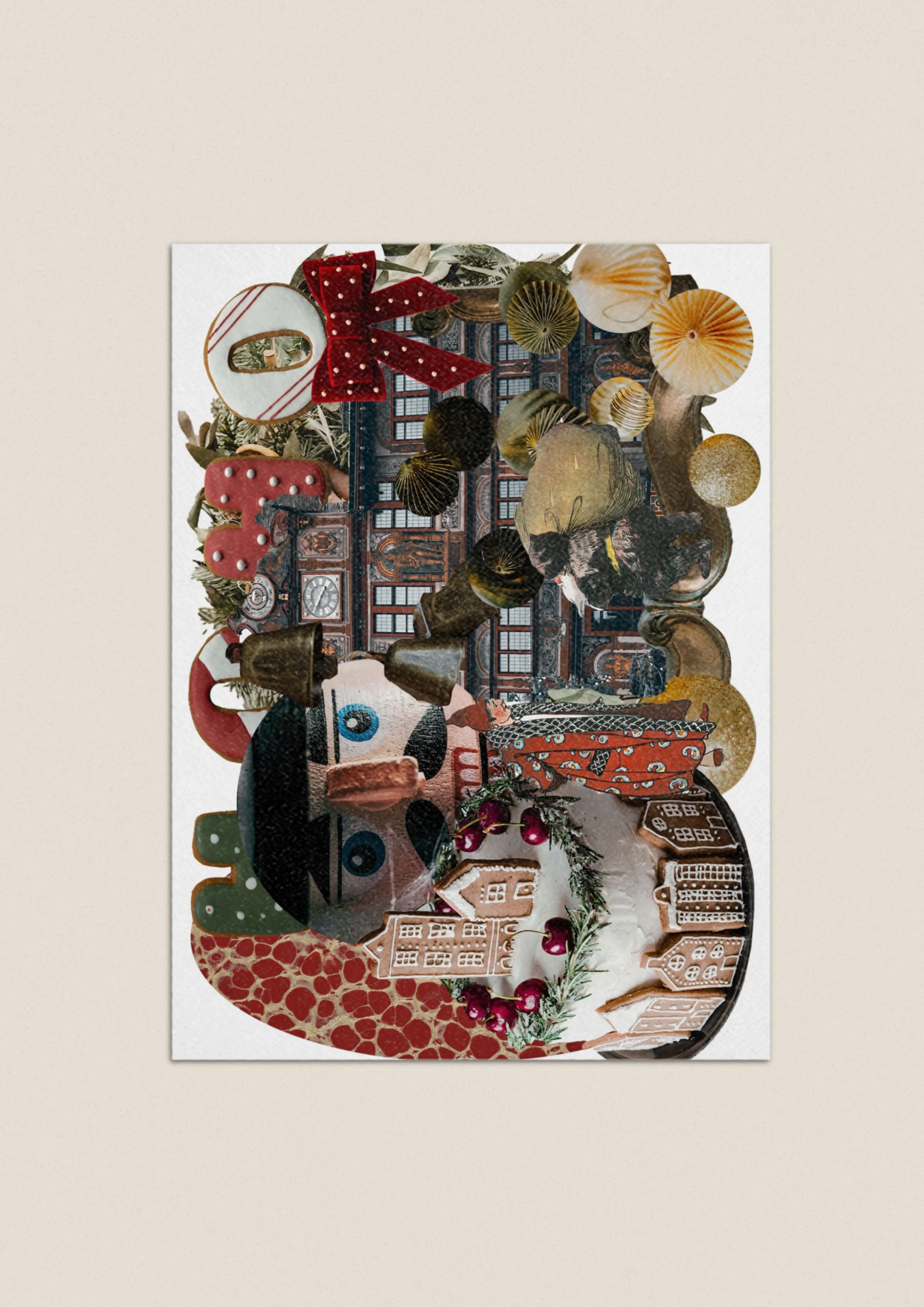
It has begun to snow again, softly, the small flakes settling on a shoulder without wetting it. The stalls have lit their lamps against the four o'clock dark. Somewhere behind us a new pot of mulled wine is going on, red and clove-dark, and the lane smells of orange peel, cinnamon and Zimtsterne.
It is into this scene that we invite you to step with our Christmas Market paper.
Our journey begins with the fruit of the season: the orange. Raw, the peel is oily and sharp, releasing a fine spray when pressed. Dried slowly above a stove, the flesh turns amber and translucent, thin enough that the lamp behind it shows straight through the segments. That is why they are hung in windows. The fruit stops being a thing you eat and becomes a thing you look through.
The next stall keeps its spices all in one basket: cinnamon, star anise, cardamom. The cinnamon we drew as the quill, rolled tight, because that shape remembers the tree, the bark cut from young shoots and left to curl as it dries. Beside it the star anise, split open, still holding its seed and the cardamom pods, pale and papery, still rattling.
Everyone's favourite stall stands at the turn of the lane, past the knitted hats and the ice rink. It sells only Zimtsterne, from a recipe handed down four generations and never written out. The daughter learned it at her grandmother's elbow, by hand and by weight, and she will not say what is in it. The stars come out warm, the icing set in a soft white cap that stops short of the points, so the dark spiced edge shows underneath. No two are quite the same. Some lean, some have a short arm. There are hazelnut ones and almond ones, and a third with orange zest grated into the dough.
Christmas Market is made for the gift you hand over in a warm room. Hold it, and you can almost feel the cold coming off your coat, and catch, just faintly, the scent of orange and a new batch of Zimtsterne on the air.
PAIRS WELL WITH
PAY WITH TWINT
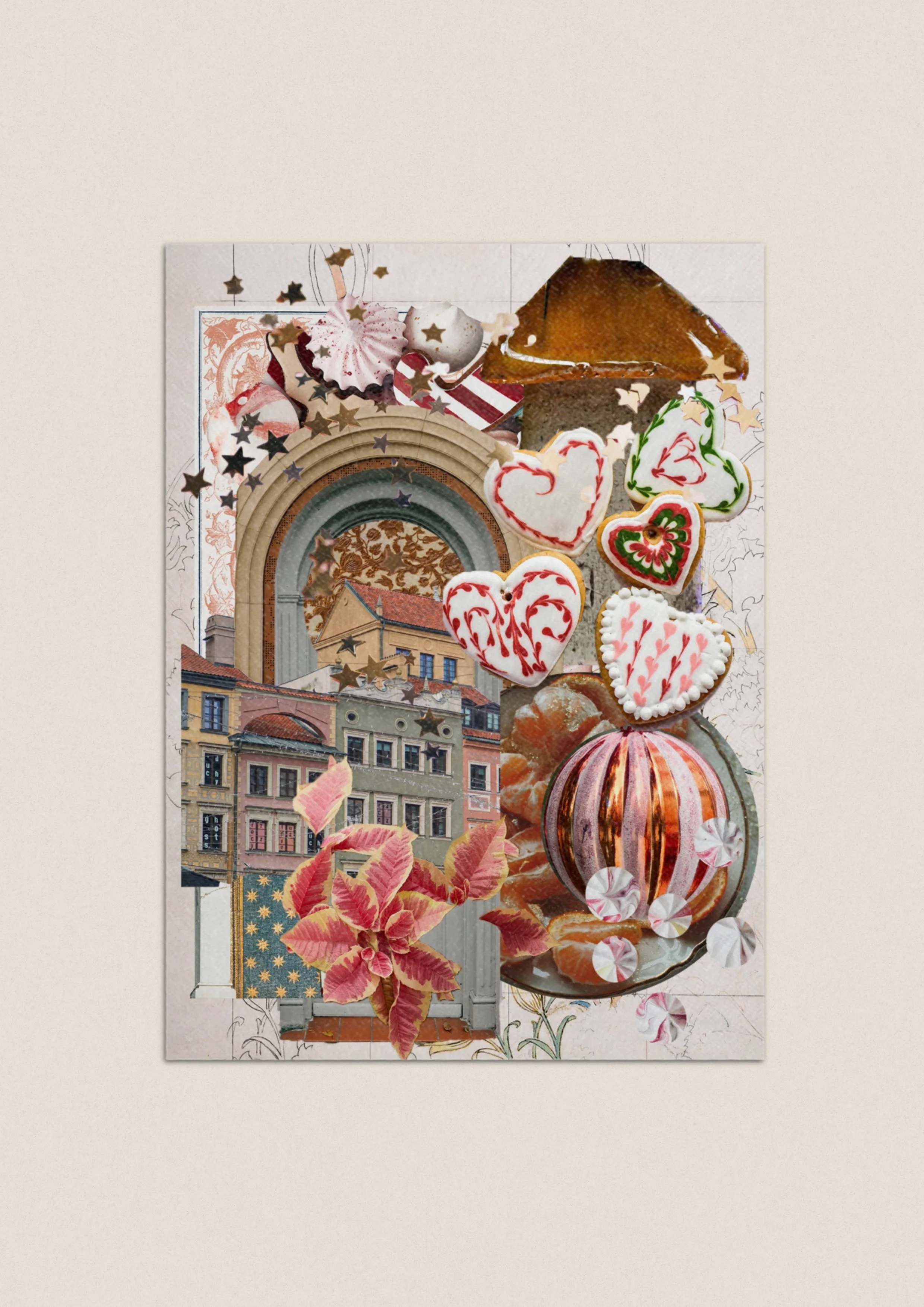
In the confectioner’s window, every flower was made of sugar. Except one.
Every December, snow settled over the old square and its rose, sage and butter yellow houses. In her little confectioner’s shop, she filled the window with sweets. Gingerbread hearts swung on red ribbons, laced with fine white icing. For the green vines, she squeezed spinach through a cloth until a few bright drops dripped into the sugar. Pink meringues tumbled into soft piles. Candied mandarins caught the lamplight like coloured glass, and a pinch of saffron turned their syrup to gold. Paper stars drifted over everything, and the scent of honey, cinnamon and warm butter spilled out onto the cobbles.
But the heart of the window always belonged to a flower. Every year, she boiled sugar in a copper pan and stirred in a drop of cochineal, a deep red crushed from tiny insects, once worth more than silver. The sugar blushed pink. She stretched it across cold marble until it gleamed like silk. She coaxed each petal into shape by hand, thin enough to let the light through. And every year, before Christmas, the petals cracked.
She tried everything. A cooler kitchen. A warmer one. More sugar, less water. Still the petals shattered.
One winter the snow came early. She worked deep into the night, until the oven cooled and the candles burned down to stubs. She fell asleep at the table, a broken sugar petal still in her hand.
In the morning, the town crowded at her window, breath clouding the glass. In the middle, where her sugar flower should have stood, a real poinsettia* had opened. Pink like her cochineal, its edges fading to cream, as if the sugar had only just begun to cool.
The old women of the square say that winter rewards those who keep trying.
Since that morning, the middle of her window stays empty. And every Christmas Eve, she looks out into the falling snow, and hopes.
*In Mexico, the poinsettia is called flor de Nochebuena, the flower of Christmas Eve. Legend tells of a poor girl with no gift to bring, who carried an armful of roadside weeds to the altar. There, they burst into scarlet bloom.
PAY WITH TWINT
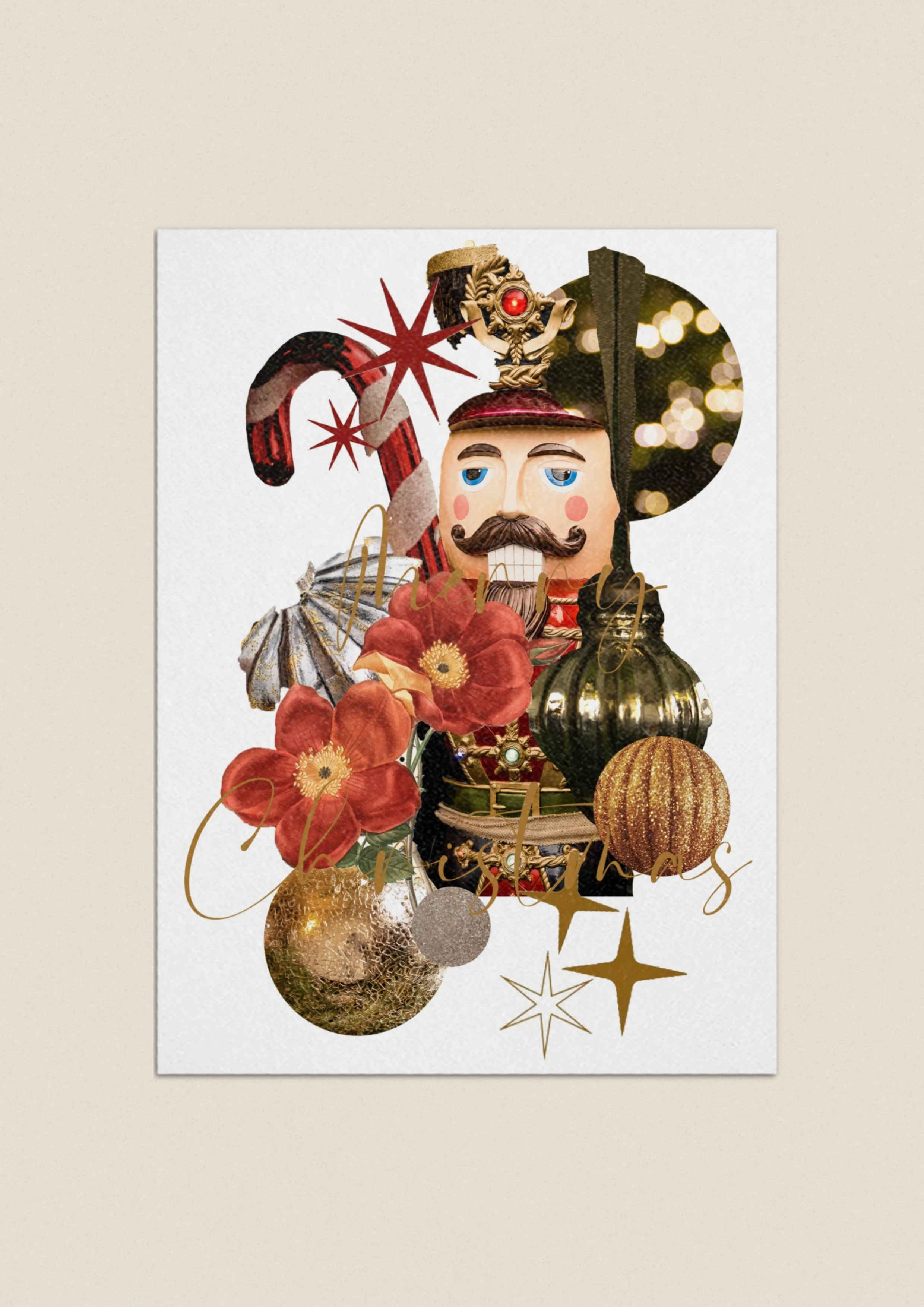
The Christmas tree is fully decorated. You sit down beside it with a card and a pen, and the room smells of spruce resin and beeswax. Lights twinkle between the boughs, and the whole tree glitters and shines.
Look closely, and everything on this card is hanging right in front of you.
A wooden nutcracker in a cinnabar red coat, a red stone shining on his helmet. His moustache is carved in thick curls, his cheeks painted rosy, his jaw ready to crack the hardest walnut. In the Ore Mountains of Germany, woodturners shaped figures like him through the long winters. People there believed he guarded the house, showing his strong teeth to bad spirits and keeping misfortune away. In an old story, he even comes to life on Christmas Eve, when the clock strikes midnight and the toys begin to move. Between the branches, wild roses open around golden centres. A bottle green glass bauble reflects the whole room. A gold one, covered in glitter, throws small sparks across your hands. And between them hangs a candy cane, striped red and white. Legend tells of a choirmaster in Cologne who bent sugar sticks into the shape of a shepherd’s crook, to keep the children quiet during the long Christmas service. Since then, the little crook has hooked itself onto branches all over the world, sweet as peppermint and bright as a ribbon.
At the top of the tree shines a star. Outside the window, Sirius answers it, the brightest star in our night sky. The Greeks called it Seirios, meaning glowing or scorching. For centuries, travellers followed it through the darkest nights.
Now you pick up the pen. Merry Christmas. You pause for a moment and watch the lights.
Then you begin to write, and the whole tree seems to lean in and read over your shoulder.