THE ETIQUETTE OF GIFT GIVING IN BUSINESS
Marco had spent days and nights in his dimly lit workshop in the Cannaregio district. He stood over the drawloom, day after day, in a room filled with the smell of boiled silk and sour dye. The stakes were high. The velluto alto-basso was commissioned by the Venetian Republic and was to be sent all the way to Istanbul, to the grounds of the Topkapi for the Grand Vizier.
The silk was dyed using expensive kermes; crushed Mediterranean insects had created the perfect shade of imperial red. Instead of Biblical figures and scenery, the textile, meant to be tailored for a kaftan, showcased Ottoman pomegranates and curving tulips. As he wove a golden thread at the centre of a blossom, he felt the pressure of Venice’s merchant success on his shoulders. One mistake and the Eastern part of the Mediterranean would be out of reach for the Republic of Venice.
Silken Diplomacy
During the 16th century, Venetian merchants secured trading rights and diplomatic favours from Ottoman rulers by gifting products of their most treasured craftsmanship to the Sultan and high-ranking Viziers; a tradition known as “silken diplomacy.” With gifts made of silk, the Republic of Venice maintained access to trade routes in the Eastern Mediterranean, even during periods of political tension.
A gift, regardless of its original intention, can be favourable but also undesirable. When it involves an exchange between two different cultures and with the intent to establish business relations, many things can go wrong. The Sultan would perhaps question the merchants’ intentions if the textile displayed the Immaculate Conception rather than an Ottoman motif.
The Venetian weavers had the immense responsibility of creating textiles that would appease rather than offend the Ottoman rulers. Instead of standard European designs, which usually revolved around Christian symbols, they wove traditional Islamic patterns and Ottoman symbols: tulips, carnations, pomegranates, and tiger stripes. Emerald green and sapphire blue were replaced by crimson red with golden details.
The Universal Rules of Gift Giving in Business
What the Venetians knew well was one of the most important rules of gift giving in business. Local and universal taboos should be avoided at all costs. Alcohol, pork, and leather products are not popular business gifts if the recipient’s religion is unknown. Perfume, clothing, and jewellery are overly personal and can be perceived as inappropriate.
Researching local customs is perhaps the second most important rule. In China, clocks, watches, green hats, umbrellas, and anything that comes in sets of fours are associated with death and broken relationships. In Japan, sharp objects may symbolise cutting a business relationship, whereas certain flowers, such as lilies, are associated with burials. In the US, religious and political themes are usually unfavourable; being politically correct is usually the way to go.
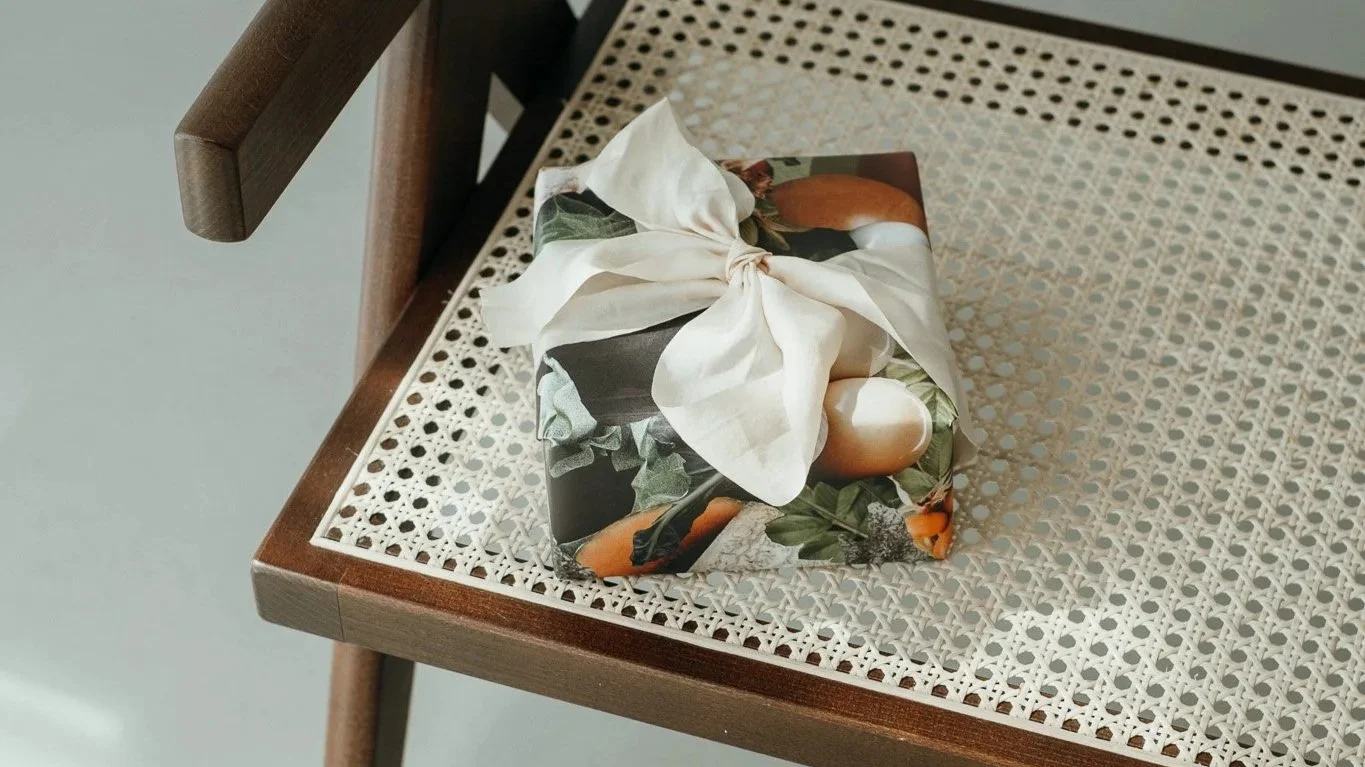
In every culture, the gift presentation is as important as the gift itself. Red envelopes and silk wrapping are very common in Asian countries, whereas decorative wrapping paper and a handwritten card are expected in the West. Although a small logo detail, such as on the wax seal that binds the envelope, is customary, heavily branded gifts are seen as advertisements, rather than genuine gifts. For example, a water bottle with the company logo is not well-perceived in most circumstances.
On the contrary, non-branded custom items are a beautiful way of showing care and appreciation. Instead of ordering cards and wrapping paper that have the company logo printed all over, you can commission an artist to create a one-of-a-kind design that communicates the company’s values and overall aesthetic. The colours, the motifs, the patterns, the symbols can be “on-brand” without screaming “corporate advertisement.”
If the gift is sent via mail, it is customary to dedicate some time to write a personal message by hand. It adds a personal character to the act which could easily be perceived as another corporate task. When the gift is not delivered but rather given in person, the way it is handed to the recipient is sacred. Maintaining eye contact and holding it with both hands is a sign of respect.
(01) Avoid universal taboos
(02) Learn about local customs
(03) Presentation matters
(04) Stay clear of overly branded items
(05) Create custom-made gifts and gifting accessories
Beautifully Made Gifting Accessories for Special Partners
At Manuela Menzi Studio, gifting becomes an art form. Discover a curated list of decorative paper, greeting cards, and a limited collection of fabric wraps that transform each gift into a story narrated through their motifs and colours.