
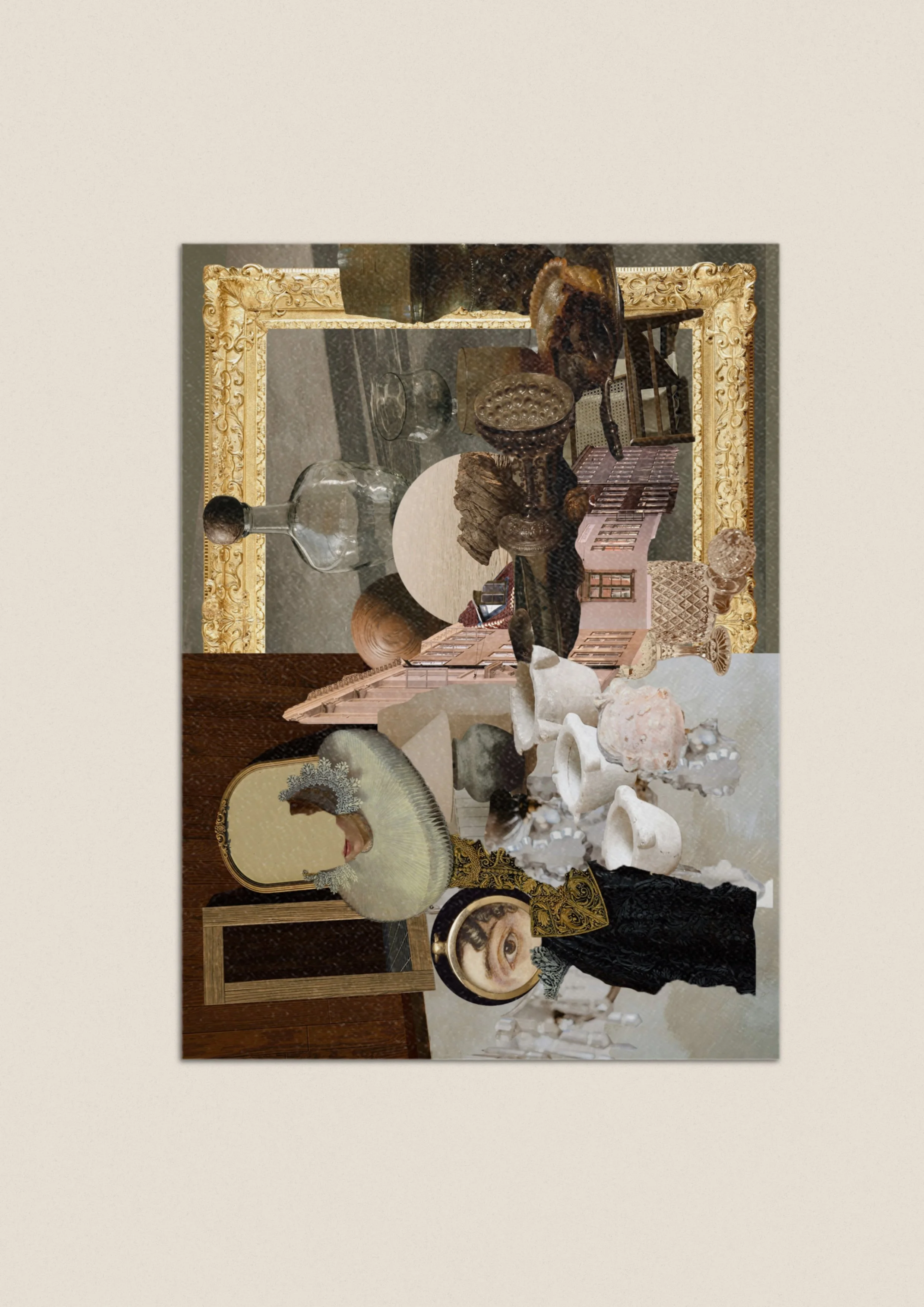
 Image 1 of 1
DETAILS
SIZE
A6 10.5 x 14.8 cm
BACKSIDE
Blank for your message
Soft and uncoated, that welcomes ink and holds it well
PAPER
MADE IN
The UK
-
FREE WORLDWIDE SHIPPING ON ALL ORDERS
Orders are usually shipped within 2–3 working days, and international shipping is available.
Please note that customers may be subject to customs duties in their respective countries, which are their responsibility.
You can also pay directly via TWINT.
You’re also welcome to pick up your order directly from the studio in Meilen. Important: Please call or text ahead to arrange a pickup time. This ensures I’m at the studio and have your order prepared.
-
Handle with clean, dry hands to keep the print looking its best. Store flat in a drawer. Keep away from direct sunlight to preserve the colours over time.
Read more here
PAY WITH TWINT
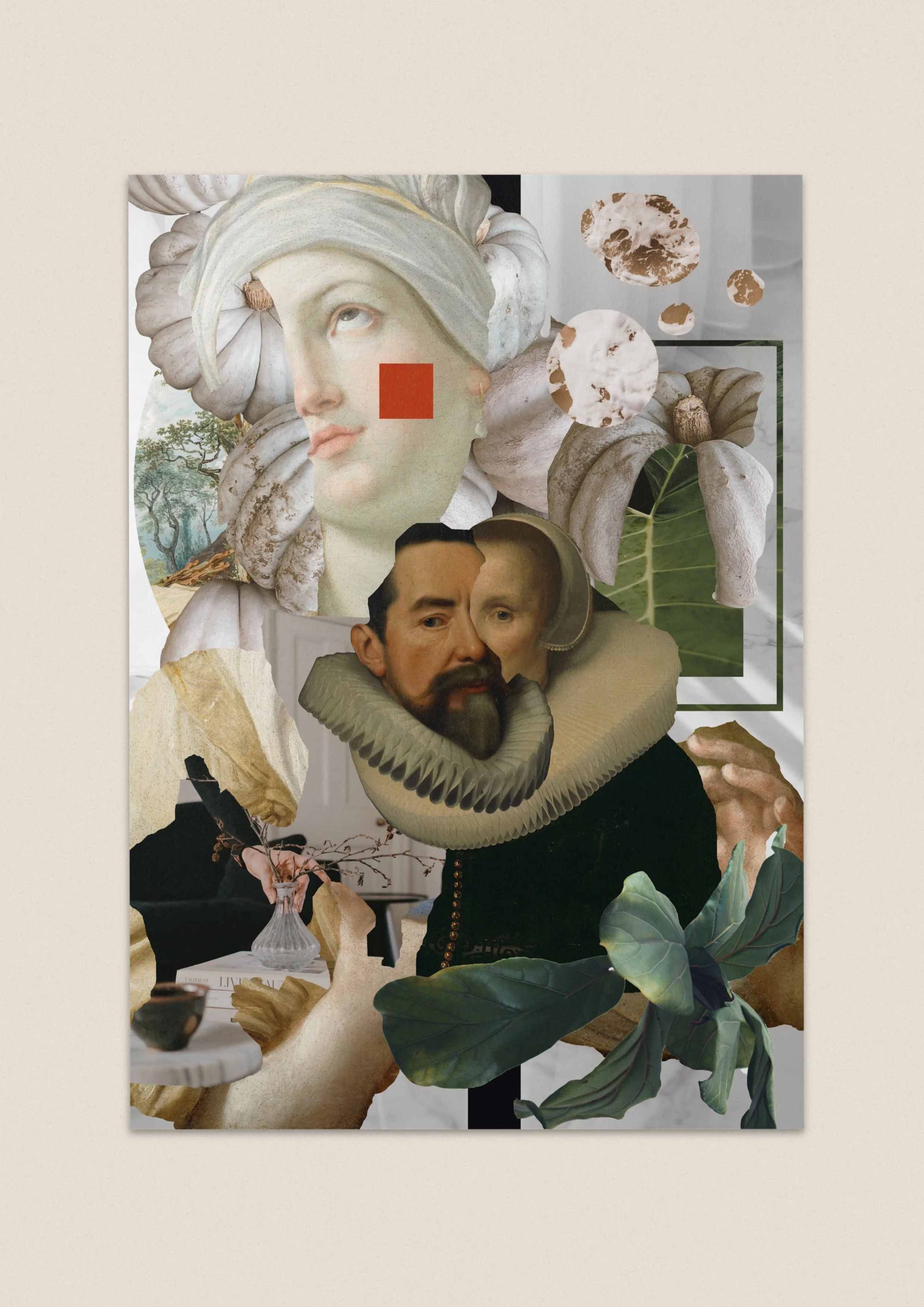
When Mausolus of Caria died in 350 BC, his wife Artemisia II did not simply mourn him. After his cremation, she mixed his ashes into her daily drinks, making herself into a living tomb, carrying him inside her as she carried on ruling. And rule she did, under enormous pressure. Cities and islands across her domain refused to accept a female successor and revolted. Artemisia wore a crown in the storm, drawing on strategic brilliance to suppress the uprisings and hold her power together until her own death two years later.
The widow's extraordinary grief and turbulent reign have inspired artists for centuries. At the heart of the wrapping paper collage "A Crown in the Storm" is Guido Reni's "Portrait of a Woman" (1638-1639), a Baroque masterpiece depicting Artemisia in a turban, cradling a Lapis Lazuli bowl containing her husband's remains. Her gaze tilts upward, torn between devotion and anguish, and it sets the emotional tone for the entire composition. Around her, further fragments of Baroque portraiture deepen the drama, while glimpses of Paul Sandby's "The River Severn at Shrewsbury" (1770) introduce a sense of turbulent, flowing time. Botanical elements, geometric shapes and layered textures complete the collage, echoing the tension between order and grief that defined Artemisia's reign.
Printed on premium paper designed to survive the unwrapping and be kept, "A Crown in the Storm" gives your gift two layers: what is inside, and the story wrapped around it.Because the way you wrap something says as much as what is inside.
PAIRS WELL WITH
PAY WITH TWINT
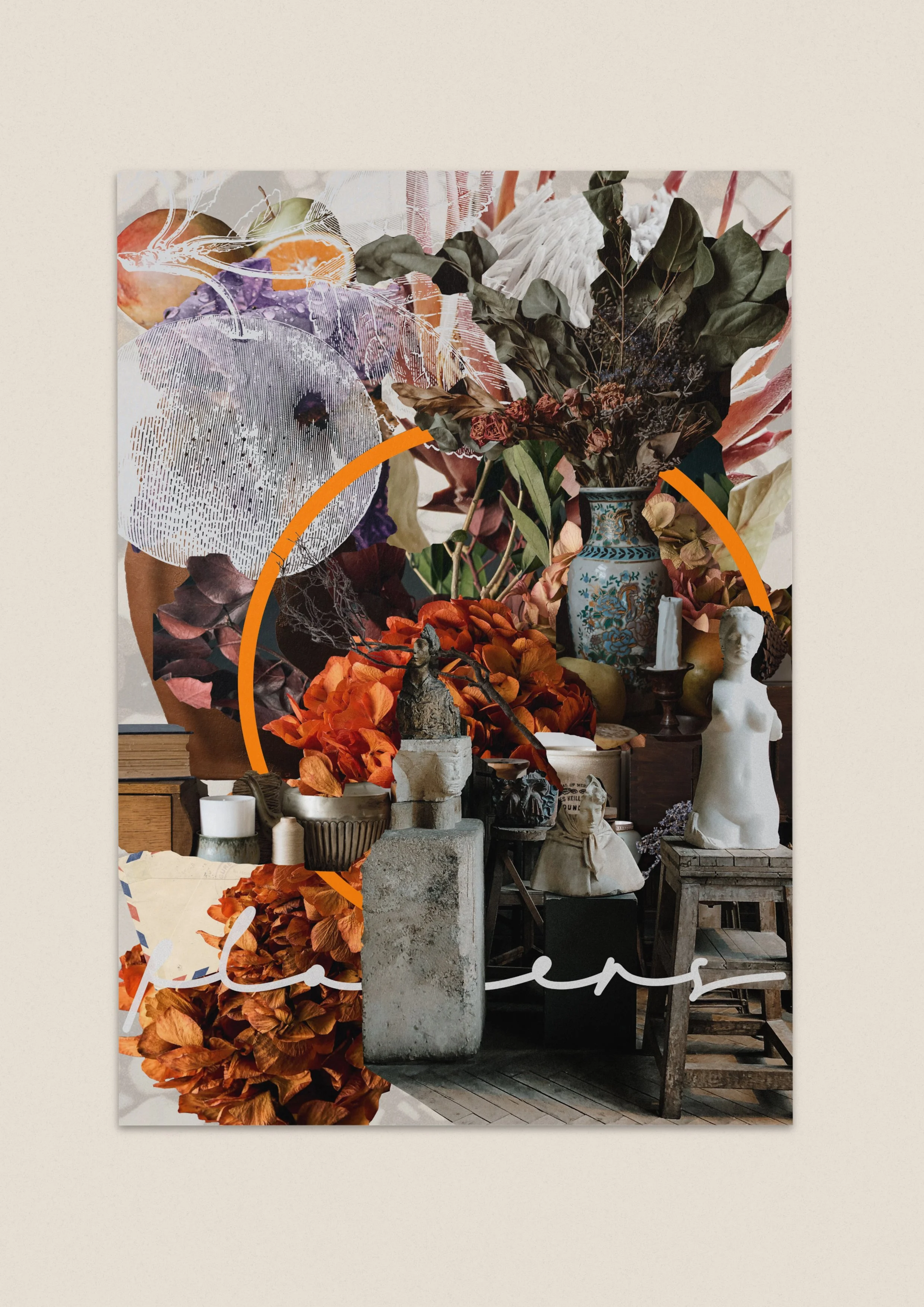
Mr. Bergmann’s flower shop sits in the old town of Zurich, in a street that has seen several centuries pass without too much fuss. We don't know exactly how long he has been there. We like to think long enough that the city has simply grown around him.
Inside, it is darker than you expect. Light comes in from the street in long narrow strips, catching the dust and the pollen and the dried petals suspended in the air. Your eyes adjust slowly, and as they do, the shop reveals itself in layers.
The first thing you notice is the smell. Something green and earthy underneath, then something sweeter on top. Fresh dahlias, their heads heavy and elaborate, in deep burgundy and burnt orange. Then something drier, older. Lavender, perhaps, or chamomile. The kind of smell that makes you think of remedy.
Which makes sense. For most of human history, a shop like this would have been a pharmacy. The flowers and plants that now sit in vases were once kept in labelled jars, weighed out carefully, prescribed. Calendula for skin. Chamomile for sleep. Hydrangea root for the kidneys. The line between a flower shop and an apothecary was, for a very long time, not a line at all.
Mr. Bergmann seems to know this, even if he has never said so. His shelves hold more than flowers. Wide-mouthed ceramic ones in earthy greens, tall glass ones with dried grasses spilling over the edges, small terracotta pots with single stems.Leatherbound books stacked on the floor beside them, their spines unreadable. Used candles burnt down to their last centimetre. Dried fruits. A sculpture or two, origin unknown.
We wonder what he thinks about when he arranges things. Whether he considers the dried and the fresh, the living and the preserved, the ancient and the newly cut, as different things at all.
PAY WITH TWINT
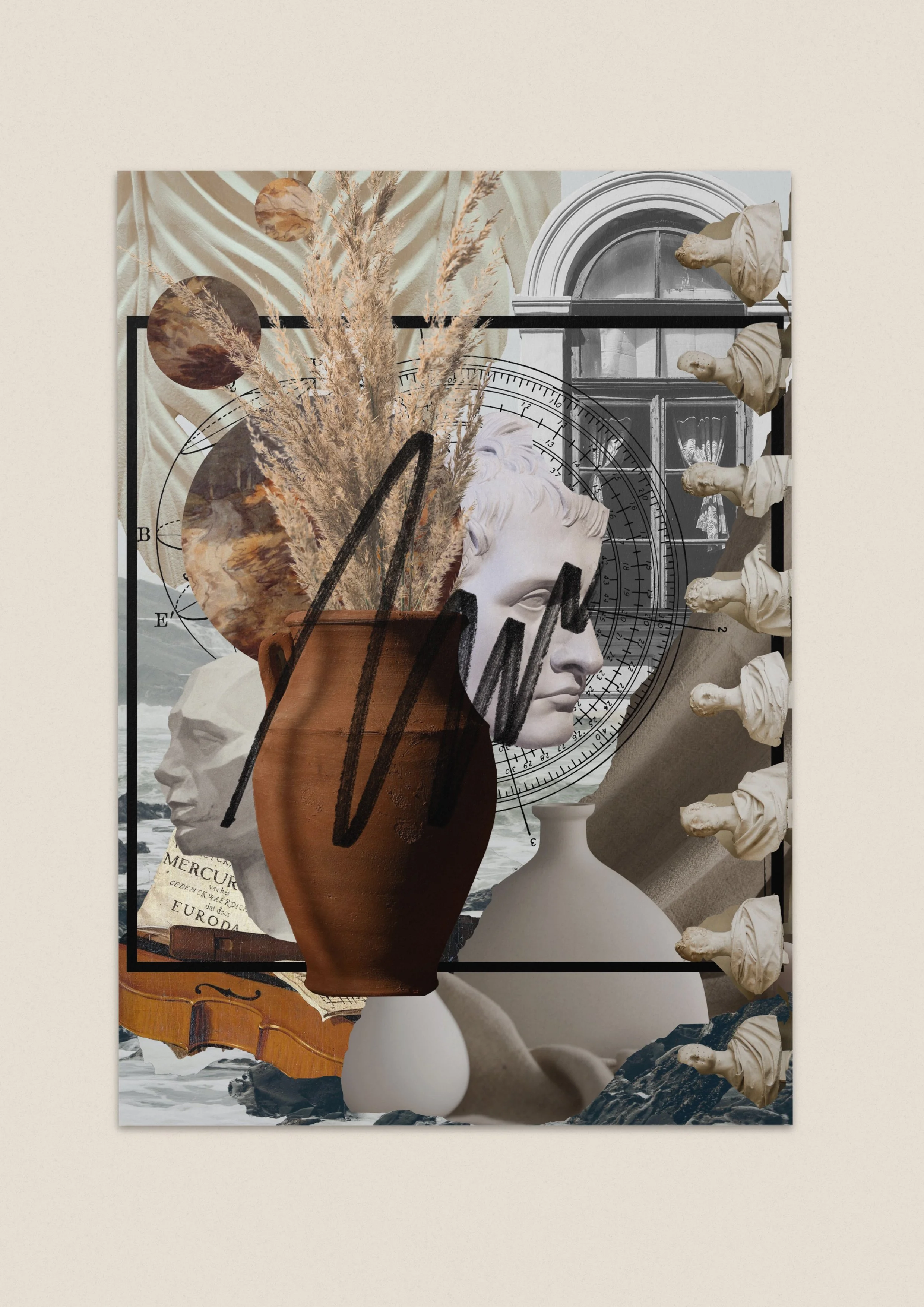
Winter arrives quietly at the old observatory. Frost creeps up the copper dome. By midnight it has dulled to silver under a hard white moon. She has kept this place for forty years, since the gears still turned smoothly and the telescope was the newest thing on the hill. For this wrapping paper we climbed up to find her there, still tending the same instruments, still watching for whatever the sky might show her next. A shooting star. A comet. A shape she hasn't charted yet. We call it "The Queen of Algorab," after the one she found and never stopped looking for.
She told us the story slowly, pausing to check a dial, to wipe frost from a lens. Every night she climbs the narrow stair, log book under one arm, and cranks the dome open to a seam of sky. The hinges complain, as they always have. Cold air pours in, carrying pine resin from the slope below.
One night, decades ago, fog swallowed every star she knew. She waited it out, sleeves pulled over her hands. Then a single gap opened directly above her. Through it, a shape she had never charted: a bird stretching its wings across the dark, one point at its edge burning steadier than the rest. An old colleague, visiting for the meteor shower, named it for her. Algorab, the crow's wing, a white star some eighty seven light years off, marking the corner of a small quadrilateral sailors once steered by. Its name comes from the Arabic for crow, older than the observatory, older than the hill itself.
She cannot see it all year. It climbs into view only as the coldest nights start to loosen their grip, low near the horizon before dawn, higher each week as the season turns. So she watches for it here, in this narrow stretch of winter, the way you might watch for one particular person in a crowd you know will thin eventually.
By morning the dome closes over a sky gone pale grey. She locks the door, leaves the key under the same stone as always, and walks down the hill. Somewhere above her, fading now, Algorab is already waiting for next winter to bring it back.